

When you snorkel Hawaiʻi’s clear shallows, you’re not just spotting reef fish, you’re entering waters where sharks are protected, and that changes how you move and what you do. In state waters, from the shoreline out to 3 miles, you can’t intentionally catch, kill, entangle, or even possess shark parts, and yes, catch and release is off the table. So what counts as “intentional,” and what should you do if you see something sketchy?
Key Takeaways
- Hawaiʻi’s Shark Protection Act (Jan 1, 2022) bans intentionally capturing, killing, entangling, or possessing sharks in state waters.
- Catch-and-release shark fishing, shark-hunting trips, and shark-fishing charters are illegal within 3 nautical miles of shore.
- Violations can bring $500 first-offense fines, $2,000 later, up to $10,000, plus possible seizure of gear and shark parts.
- Sharks help reef health by controlling mid-level predators, supporting herbivores that graze algae and protect coral growth.
- Support conservation by reporting violations to DOCARE/DLNR, choosing shark-safe seafood, joining cleanups, and booking ethical cage-free shark tours.
Shark Conservation in Hawaii: What’s Illegal
While you’re planning that sunrise paddle or a lazy shoreline picnic, it’s worth knowing that Hawaii’s Shark Protection Act, in effect since Jan 1, 2022, makes it illegal in state marine waters to intentionally or knowingly capture, entangle, kill, or even possess any shark, and that includes “just for fun” catch and release.
Think of it as shark conservation with teeth: the Hawaiʻi Shark Protection Act says it’s illegal to capture sharks, run shark hunting trips, or join shark‑fishing charters.
Remember the catch‑and‑release prohibition, too.
The possession ban covers whole sharks and parts, so don’t keep trophies.
Violations bring penalties and fines, $500 first time, then $2,000, and up to $10,000, and officers can seize gear.
Spot trouble, note the location, and call DOCARE/DLNR.
If you’re booking a cage-free tour, use a shark dive operator checklist to choose an ethical, safety-focused company on Oahu.
Where the Hawaii Shark Rules Apply (and Exceptions)
Now that you know Hawaii doesn’t treat shark catch and release as harmless fun, the next smart step is figuring out where those rules actually follow you, from a rock ledge with a handline to a charter boat offshore. Under the Hawaiʻi Shark Protection Act, State marine waters run from the shoreline out 3 nautical miles, so the intentional capture rule covers each island and species in Elasmobranchii. Tours operating near Oʻahu should also watch for nearby Marine Protected Areas that can add location-specific restrictions beyond general state shark rules.
| Situation | What you do |
|---|---|
| unintentional capture | Use best‑practice safe release, report entanglements. |
| charter shark fishing | Don’t book it, it’s banned, and DLNR/DOCARE can issue penalties and fines up to $10,000 per shark. |
Outside state waters, rules may apply, but inside this band you’re on the hook for your choices, and gear or licenses can get seized.
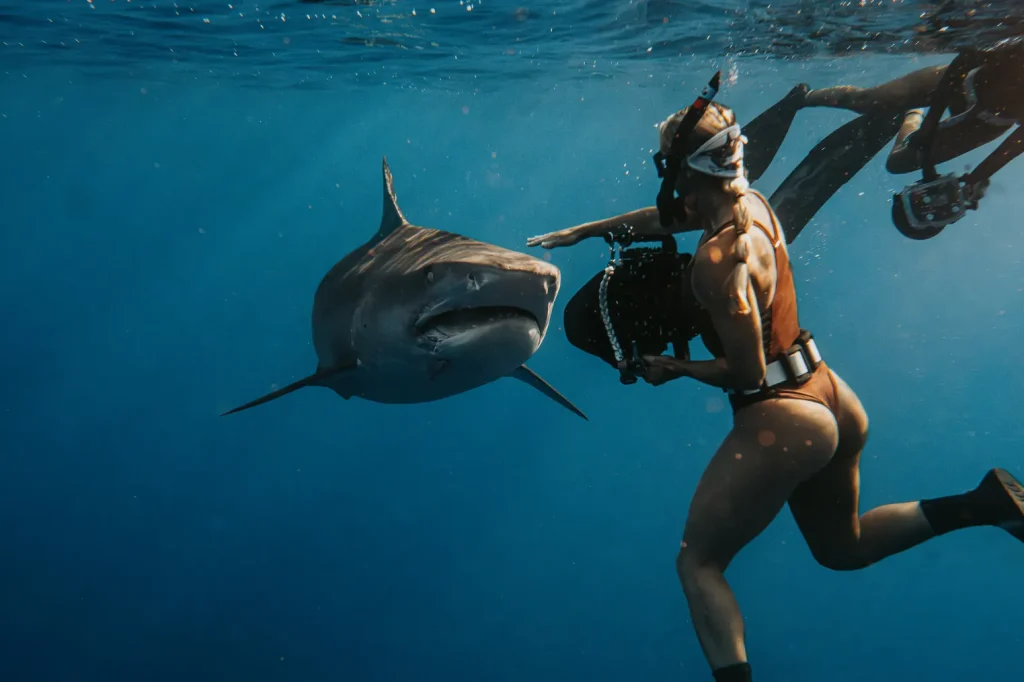
Why Shark Conservation in Hawaii Helps Reefs
Look past the dorsal fin and you’ll see a reef’s quiet support system at work, because sharks help keep Hawaiʻi’s underwater neighborhoods balanced. As apex predators, Sharks trim back mid-level hunters so they don’t wipe out herbivores, the grazers that keep algae off coral reefs and protect reef health.
When shark populations fall, you can often spot the shift, fewer grazers, more slick green fuzz, and stressed corals that grow slower.
On Oʻahu, researchers use tagging and tracking to follow shark movements and better understand how their behavior supports healthy reef ecosystems. You also benefit from sharks culling sick fish and spreading a subtle “don’t linger here” signal, so grazing gets shared across the reef and ecosystem balance holds. With smart shark protection in Hawaiʻi, marine conservation teams can track changes, and tour fees can support monitoring that keeps reefs vibrant for your next snorkel.
How to Support Shark Conservation in Hawaii
Healthy reefs don’t happen by accident, and the same goes for healthy shark populations, they rely on everyday choices you can make on land and at sea.
Healthy reefs and shark populations don’t happen by accident, they thrive on everyday choices you make on land and at sea.
Back on shore, support the Shark Protection Act by reporting illegal shark capture, entanglement, or possession to DOCARE at 808-643-DLNR or the DLNRTip app, fines can hit $10,000.
This supports DLNR’s mission of safeguarding resources held in public trust for current and future generations during the Year of our Coastal Kuleana.
At the fish counter, pick shark-safe seafood and check The Fishes GOOD FISH / BAD FISH guides, it’s like a pocket map for your plate.
Lend time or dollars to DLNR Division of Aquatic Resources projects that power tagging and monitoring, then join beach cleanups to pull marine debris before it becomes a snare.
Finally, book shark ecotourism with quiet, engines-off operators, you’ll learn more while leaving sharks unbothered.
Frequently Asked Questions
What Prompted Hawaii to Pass the 2021 Shark Protection Act?
You’d seen historic declines amid commercial pressures and habitat loss; public outcry after high profile incidents, scientific evidence of economic impacts to marine tourism, fueled policy advocacy, echoed international treaties, and pushed lawmakers to act.
Do These Protections Affect Traditional Hawaiian Cultural Practices Involving Sharks?
Yes, you’ll feel it: like a net snagging your canoe, law restricts customary fishing and religious observances. You must align Native kapu, ceremonial protocols, kupuna knowledge, mo‘olelo transmission, lā‘au practices, wahi kapu, genealogical ties, cultural resurgence.
How Can I Report a Shark Entanglement or Suspected Violation in Hawaii?
Report it: call wildlife hotline numbers (DOCARE 808-643-3567), use DLNR online form/Tip App, and alert harbor authorities, coast guard, local police, or marine patrol; send NOAA Fisheries photo evidence; don’t use an entanglement kit.
Are Shark Research and Tagging Still Allowed Under Hawaii’s Protections?
Yes, you’ll do shark tagging if you secure research permits, follow observer protocols, field safety, specimen handling properly and nonlethal methods, use tracking technology, commit to data sharing, coordinate private partnerships, and complete permit renewal.
How Do Hawaii’s Shark Rules Compare With Protections in Other U.S. States?
State comparisons: you’re entering harbor: Hawaiʻi bans all shark capture; others rely on federal overlap, species coverage, fishing gear limits, seasonal closures. You face tight enforcement penalties, protected habitats, recreational limits, permit systems, public education.
Conclusion
Out here, you can chase thrills, but you can’t chase sharks, Hawaiʻi’s rules make capturing, killing, or even catch and release illegal in state waters. That contrast is the point, let the reef stay loud with parrotfish crunching and quiet with sharks gliding past like shadows in clear water. If you see a violation, note the time and location, then report it to DLNR/DOCARE. Pack out fishing line, choose shark safe tours, skip shark products.


