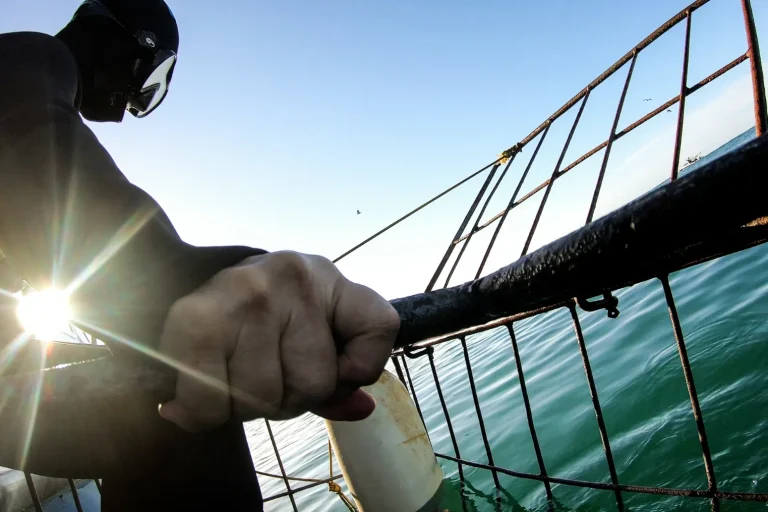
You probably don’t know that most valuables go missing on shark dive days during the dock scramble, not in the water. You’re juggling fins, hearing boat lines creak, and your phone slides toward the edge like it’s making a break for it. Lock passports, extra cards, and jewelry in a hotel safe or a locked bag before you leave. Carry only your ID, one card, a little cash, and local contact info in a triple-lock waterproof pouch on a breakaway lanyard. Now, what about keys and cameras?
Key Takeaways
- Bring only one driver’s license, one credit card, a small cash roll, and island contact info; leave passports, extra cards, and jewelry locked away.
- Use the boat’s guest safe or your hotel safe for passports, extra cash, and electronics before boarding.
- Seal essential ID, card, and cash in a triple-lock waterproof pouch on a breakaway lanyard or clipped to a wetsuit D-ring.
- Protect phone and camera in hard waterproof cases with a zip-top backup layer, and keep them padded and secured to prevent deck impact.
- Test waterproof pouches at home, and stash dry boxes or lockboxes inside luggage or boat lockers to prevent loss or delays.
Pack a Shark Dive Checklist (Bring vs Leave)
Before you step onto the dock and hear tanks clink and gulls argue overhead, pack your shark-dive valuables like you’re editing a suitcase down to the essentials. Bring your driver’s license, one of your credit cards, and a small roll of cash, because tiny islands don’t always have ATMs and damp bills still spend fine. If you’re driving yourself to the harbor, build in time for parking costs and timing so you’re not rushing your gear or leaving items visible in the car.
Leave passports, extra cards, and jewelry locked and out of sight. If you can, leave in hotel safe, or seal them in a locked suitcase. For what must travel, stash it in a waterproof dry box inside your bag, then double-bag with zip-top or silicone pouches. Keep a key fob and ID on you in a wearable waterproof pouch so you’re not digging with wet fingers between dives, either.
Lock Up Valuables Before Your Shark Dive Boat
Once you’ve trimmed your pocket load to the basics, the next move is to lock everything else down before you step onto the shark boat and the deck starts to feel like a bouncing garage full of tanks and fins.
Ask the crew for the guest safe, or use your hotel safe for passports, cash, electronics. For keys, phone, and cards, seal them in a waterproof dry box and slide it into luggage or a boat locker. If you’re bringing one, secure it with a padded camera case so it doesn’t slam around on deck between tanks and fins. If there’s no safe, stash a small lockbox inside your suitcase. Hand the key or combo to a friend, not your wetsuit pocket.
If you must keep one item on you, use a wearable waterproof case. Add a zip bag, check the seal, and keep it upright.
Carry Shark Dive Essentials in a Waterproof Pouch
Often, the smartest thing you can wear on a shark dive isn’t gear at all but a tiny triple-lock waterproof pouch. Slip it on a neck lanyard or tuck it inside your wetsuit where it stays flat and quiet against neoprene. Keep it card-size so it won’t fight the required gloves and full suit when you fin past the ladder and hear bubbles hiss. Pack it alongside your other shark dive essentials so your ID and cash stay protected from spray on the boat and saltwater in the water.
- One driver’s license
- One credit card
- A few folded bills plus island contact info
- A second zip-top bag for small electronics
Use a breakaway lanyard or clip the pouch to a wetsuit D-ring so it releases if it catches. Test it at home by submerging it for minutes, then dive with easy confidence on every tour.
Avoid Shark Dive Mistakes That Cause Loss or Delays
That little waterproof pouch keeps your must-haves close, but the bigger win is skipping the classic shark tour slipups that turn a clean launch into a wet scramble.
Leave passports, extra cash, and spare gadgets locked in the boat’s compartment or the resort safe, not on the water.
Carry only your driver’s license, required ID, and a few bills in the pouch or KeyPod clipped inside your wetsuit.
Put your camera and cell phone in hard waterproof containers, then add a zip-top bag for backup and keep the box upright.
At the harbor, use waterproofing tips like sealing ports and double-checking case gaskets before you step onto the dock.
Stash that box inside a float-ahead drybag tethered to the buoy, so you can grab shots without a splash.
Keep suitcase keys separate, tell the crew where IDs are, and you’ll dodge paperwork delays.
Frequently Asked Questions
What Happens if Valuables Go Missing During the Tour?
You report it to the crew and captain immediately; they’ll search, run equipment checks, and document guest statements. Get a report for insurance claims, check CCTV/access logs, file police reports, and confirm third party liability.
Does the Operator Provide Insurance or Compensation for Lost Items?
Usually you won’t get insurance coverage or guaranteed compensation policies for lost items; operator liability’s often waived. You should check terms and ask about lockers/safes, any loss protection may apply only if you prove negligence directly.
Can I Access My Locked Valuables During the Trip Between Dives?
Usually you can’t access locked valuables between dives. On charters, crews spend ~70% of time on safety checks. Expect restricted locker access during dive breaks; vessel movement may limit entry, and you’ll need guide accompaniment.
Are Tips Expected, and How Should I Carry Cash Securely?
Yes, you should expect cash tips for crew and photographers. Carry them in a waterproof pouch with a zip bag. Use tip envelopes for discrete payments. Leave extra cash locked up, and ask about electronic tipping options.
What ID Is Required, and Should I Bring the Original or a Copy?
You’ll show a driver license or passport at check-in; if you’d rather not carry the original passport onboard, lock it up and bring a passport photocopy instead. Keep an emergency contact and medical card waterproofed.
Conclusion
Once you’ve packed smart, the day feels easy. You’ll hear the deck boards creak, smell salt on your wetsuit, and watch blue water turn to velvet below. Your passport and extra cards can enjoy a quiet nap in the safe. You keep one ID, one card, and a little cash sealed in a triple-lock pouch on a breakaway lanyard. Clip it to a D-ring. Test your cases early. Then drop in on time.