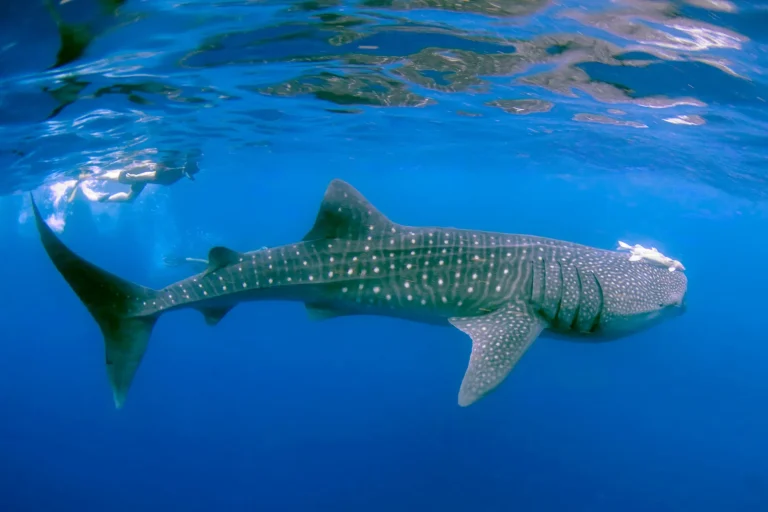
You’re in blue water, a shark glides past like a slow subway car, and your chest suddenly feels tight, that’s your early warning. Instead of kicking harder, you stop, float on your back or hang loose and vertical, tilt your head so your airway stays clear, then breathe like a metronome, in for 4, brief hold, out for 6. Keep the shark in view, signal your buddy, and check your air, because your next move matters.
Key Takeaways
- Spot early panic signs: rapid shallow breathing, frantic finning, wide eyes, garbled signals; close distance to buddy and alert the guide immediately.
- Stop moving and float; tilt head back, clear your airway, and use 4-4-6 breathing until your heart rate and buoyancy settle.
- Keep sharks in view with slow head sweeps; no touching or chasing, avoid thrashing, and use controlled kicks or neutral legs.
- Check air and buoyancy; make small BCD adjustments, signal “need help,” and commit to exiting if below one-third gas reserve.
- If you must ascend, go vertical and rise slowly with a safety stop; inflate BCD on surface, keep mask/regulator on, and follow boat exit procedures.
Spot Panic Signs Early on a Shark Dive
Often, the difference between a smooth shark dive and a stressful one shows up first in small, easy-to-miss tells, so you’ll want to scan your buddy the way you’d scan a new shoreline, calmly and on purpose.
Scan your buddy like a new shoreline, calmly, on purpose, because small tells often decide whether the shark dive stays smooth.
Watch their breathing, if it flips to rapid, shallow gasps, panic may be loading and buoyancy can drift.
Notice hands and fins, uncontrolled sculling or frantic finning kicks up sand, makes noise, and in shark diving that commotion reads like trouble.
Check the face for wide eyes, a fixed stare, or scanning with no focus.
Listen for garbled sounds or hand signs that don’t match the plan.
If you spot clammy skin, shaking, or coughing on water, close the distance, signal the guide, and prioritize diving safety.
On the boat, confirm your buddy knows where the life jackets are and who to follow in an emergency so escalating stress doesn’t turn into a rushed, unsafe entry or exit.
Stop, Float, and Slow Your Breathing
When you catch those early panic tells in yourself or your buddy, don’t try to outswim them, stop the action and give your body a reset right there on the surface. Flip onto your back or hang in a loose vertical float, arms spread, let your wetsuit or jacket do the lifting, and tilt your head back so your airway stays clear. If you taste salt or get a mouthful, spit and restart, don’t gasp. Breathe like a metronome, in for 4, pause 1 or 2 if you Feel Comfortable, out for 6, protecting your air supply and dropping your heart rate. If you’re also feeling queasy, remember that proven seasickness prevention steps can keep nausea from amplifying that panic response on an Oahu shark dive.
| Move | Body cue | Breath cue |
|---|---|---|
| Stop | Legs float | 4 in |
| Float | Face up | pause |
| Signal | One arm wave | 6 out |
Wait until it feels like calm water.

Check Air, Buoyancy, and Exit Options
After your breathing settles into that steady 4 in, pause, 6 out rhythm, do a quick “systems check” like you’re glancing at a map before choosing the next turn.
Once your breathing steadies, 4 in, pause, 6 out, run a quick systems check, like glancing at a map before your next turn.
Start with check air,buoyancy,exit options. Read your pressure gauge, if you’re under one third of your starting gas or reserve, commit to leaving.
Nudge buoyancy with tiny taps, add a puff if you’re sinking, vent if you’re drifting up, and keep a neutral trim to save air.
If you’re on an Oahu shark dive, re-establish proper spacing and use agreed hand signals to alert the guide without bolting.
If gear feels wrong, switch to your alternate and watch the needles.
Scan for the safe ascent, boat ladder, shore, or shallow reef, then plan a slow rise with a safety stop.
If you must surface, inflate BCD, keep mask and regulator, and drop weight only if trained.
Still comparing What To Do If You Panic In Open Water: A Shark Dive Survival Plan?
Ask for tour ideas, hotel suggestions, or a simple trip plan that combines both.
Trip Helper
Signal Your Buddy and Close the Gap
Flash the universal distress or your prearranged panic signal, raise your arm slow and strong above your head, lock eyes with your buddy, and keep it clear like pointing to the nearest exit sign in an airport.
Then close the gap with calm, deliberate kicks, fins angled down so you can face them and stay in view, breathing slow and steady to avoid the frantic flutter that draws attention and stirs up silt.
If you need to pause mid-approach, shift into a relaxed horizontal float to stay calm and conserve energy in deep water.
Once you’re within arm’s reach, take a firm hold on their shoulder strap, signal “OK” or “need help,” and let them steady you, share air if needed, and move you to a safer spot.
Use Clear Hand Signals
Often, the fastest way to shrink panic in open water is to speak clearly with your hands, then pull your buddy in close before your breathing and thoughts sprint away from you.
Throw the universal “I need help” by raising and waving an arm overhead, then follow with “OK” or “Problem” so divers can read you fast.
During SCUBA diving, keep your buddy in sight while swimming alongside, and close the gap to 1 to 2 meters for checks and choices.
Use the out of air throat slash only when it’s real, then coordinate with a shoulder tap or hand squeeze.
If you separate, give the surface look signal, back it up with a whistle or DSMB, and rehearse until it’s close and personal.
On shark dives, choose operators that carry CPR and first aid gear onboard so a simple signal for help can turn into immediate, organized care.
Stay Within Arm’s Reach
Usually, the quickest way to stop panic from snowballing near a shark is to lock eyes with your buddy and close the gap until you’re within arm’s reach. Give your “come close” signal so they move close to within arm’s reach, then add a slow, repeated hand squeeze or tap on their glove so it’s unmistakable, even through SCUBA gear. At 0.75 to 1.0 m, your buddy can steady you, share air, and keep you facing sharks. Before you descend, quickly practice clearing your mask and snorkel so a minor flood doesn’t trigger panic mid-dive.
- Lightly hold their shoulder or BC strap, like grabbing a subway pole, so you don’t flail.
- Fin slowly toward them if they’re delayed, keep breathing smooth, like a metronome, eyes up.
- Rehearse the signal before trips in a pool, so closing in feels automatic with your kit.
Keep Sharks in View: Don’t Thrash or Bolt
Keep the shark in view as much as you can, because surprises happen when it slips behind you and your sudden movement looks like an invitation.
If your nerves spike, stop thrashing, hold a tall, slightly angled posture, and move like you’re carrying a full cup of coffee, slow hands, steady breathing, and calm signals to your buddy.
Back away at an easy pace while facing it, use your fins or camera to create a little personal space, and if it comes close, make yourself look bigger by lifting your gear as a simple, polite “not today.”
Remember basic ocean etiquette around sharks: move calmly, float when you can, and stay safe.
Maintain Visual Contact
Every time you spot a shark nearby, treat it like a moving landmark you don’t want to lose, because steady visual contact lets you read its mood and stops surprise fly-bys from your blind side. keep your eyes on nearby sharks, then scan the edges of your view like you’re checking traffic at a roundabout, and remain relatively still so your fins don’t broadcast a “wounded fish” vibe.
If water looks milky or it’s dim, tuck arm’s length to buddy so you cover each other’s blind spots, and use your dive light or camera to track the outline without bursts. This also helps you notice early shark body language cues, like a sudden change in direction or tighter turns, before they become a closer pass.
- Turn your shoulders to face an approach.
- Back away horizontally, never showing your back.
- Hold a dark, non-reflective object out front.
Move Slowly, Stay Calm
When a shark slides into view and your pulse tries to sprint ahead of you, slow everything down on purpose, because calm, steady movement reads as confident and gives you time to think, stay calm.
Start by slow your breathing with a 4-4-6 count, inhale for four, hold four, exhale for six, and you’ll feel heart rate settle, bubbles stay small. Keep sharks in view, sweep your head slowly, not swiveling, and don’t turn your back. Let your legs hang or use controlled kicks to stay neutral, thrashing looks like a luggage bag in a storm. Remember the no touch, no chase rule, don’t reach for the shark or pursue it, because giving it space helps keep the encounter calm and predictable.
Flash your buddy the signal, drift toward them, and follow safety protocols. If you must ascend, go vertical and slow, save one third of air for the stop.
After the Dive: Debrief and Prevent Relapse
After you’ve climbed back on the boat and your heart rate has settled, take the next 30 minutes like you’d take notes after a great meal, quick, specific, and worth remembering.
Do a debrief with your buddy or instructor, name what sparked the panic, how your breathing and hands behaved, and whether any strap, reg, or gauge misbehaved in those diving conditions.
On an Oahu shark dive, use the ride back to reset and review the full sequence from check-in to boat ride so you can pinpoint where anxiety first started building.
- Log hard numbers: time, depth, air use, temperature, visibility, plus any gear glitches.
- Rehearse one skill right then, like 4-4-6 breathing, a mask clear, or a controlled ascent.
- Set a staged return plan, pool to shallow shore to shark dives, with goals you can tick off.
If it was severe or you needed help, book a diving-medicine check and a retraining session.
Frequently Asked Questions
Should I Cancel Future Shark Dives After a Panic Episode?
You don’t need to cancel shark dives after one panic episode. Assess readiness by pinpointing triggers and fixing gear or skills, Seek counseling if it was severe, and Plan exposure from practice to supervised trips.
Can Anti-Anxiety Medication Be Safely Used Before a Shark Dive?
You usually shouldn’t take anti-anxiety meds right before a shark dive; even “just a small dose” can fog you underwater. Consult physician about medication timing, and prioritize nonpharmacologic strategies like breathing and visualization first.
What Legal Waivers Cover Panic-Related Incidents on Guided Shark Dives?
On guided shark dives, you’ll sign waivers shifting participant liability and documenting informed consent for panic risks like rapid ascent. They usually bar negligence claims, not gross misconduct, and may require you to indemnify operators.
How Do I Choose a Shark Dive Operator With Strong Safety Protocols?
Choose operators by verifying operator credentials and asking to see current certifications. Confirm documented protocols, safety equipment onboard, and staff emergency training. You should check guide-to-diver ratios, gear maintenance logs, and transparent incident history.
Does Dive Insurance Cover Emergency Ascents Caused by Panic?
Yes, often, but there’s a catch: you’ll get emergency treatment and chamber care if your policy allows it. Watch policy limits, disclose preexisting conditions, avoid training violations, and file prompt claim documentation for evacuation, too, ASAP.
Conclusion
On a shark dive, panic can spike like a sudden squall, but you’re not helpless. You stop, you float, you breathe slow, and the ocean quiets enough for good choices. You check air and buoyancy, you signal your buddy, and you drift closer like docking a kayak, not chasing a bus. Keep sharks in view, move smooth, then climb out, debrief, and practice once on land. Next time, that metronome breath will feel like home.