
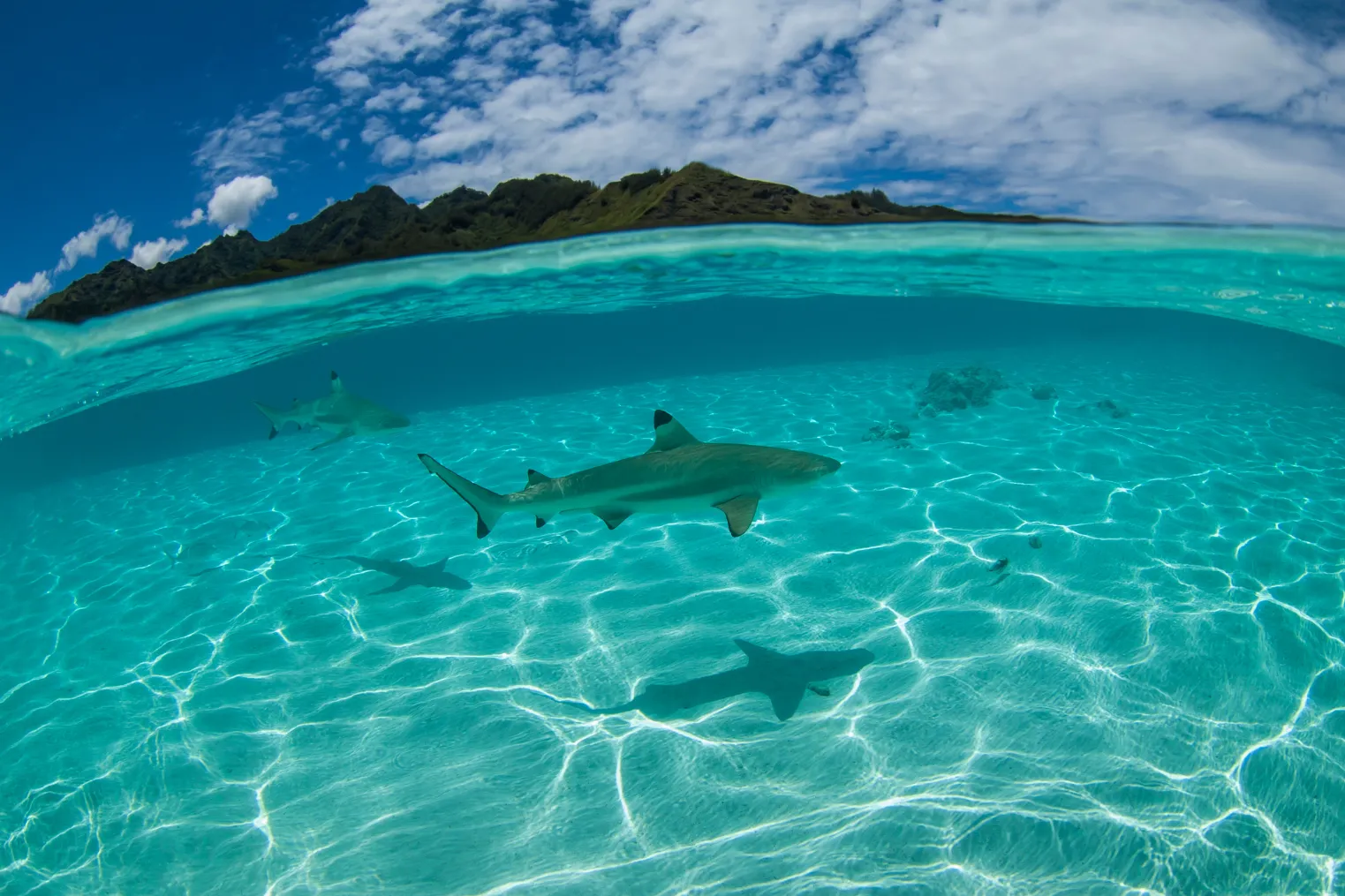
In the clear blue, a shark glides past like a quiet commuter, unbothered if you keep your distance. You don’t touch it, you don’t chase it, and you let it choose the route, because your reach and fin kicks feel louder than you think underwater. Hold a calm, side on posture, keep a few meters of space, and never block its path, then watch what changes when the shark relaxes, or when it doesn’t…
Key Takeaways
- “No Touch, No Chase” means stay calm, hang back, and let the shark control distance, direction, and timing of the encounter.
- Keep a respectful buffer: about 2–3 meters for routine viewing, and 3–10 meters for larger sharks or lower-visibility conditions.
- Never reach out, flank, block, or follow a turning shark; always leave a clear escape route and avoid crowding its path.
- Move slowly and quietly: minimize splashing, sudden kicks, and dangling gear, and keep the shark in view without hovering overhead.
- Choose operators who brief rules, limit group size, avoid behavior-altering baiting, and enforce boundaries with safety gear and clear guide signals.
What Does No Touch, No Chase Mean?
Think of “No Touch, No Chase” as the golden rule of shark encounters: you hang back, stay calm, and let the animal set the pace.
No Touch, No Chase: hang back, stay calm, and let the shark set the pace.
In practice, you keep a respectful buffer so you don’t bump fins or crowd its path, often 3 to 10 meters for big sharks and 1 to 3 for smaller ones.
You also skip the temptation to follow, flank, block, or rush in for the perfect photo, because studies link that kind of pressure to stress and quick exits.
Choosing responsible operators is part of ethical shark diving in Oahu, because good guides enforce these rules and prioritize the shark’s welfare over close-up encounters.
If you’re on a boat, you idle or cut engines and wait, no splashing, tapping, or bait tricks.
Watch for sharp turns, tail slaps, or a sudden bolt away, then back off.
Remember: no touch,no chase, even if it circles.
No Touch, No Chase: The 6 Core Rules
Start by keeping a respectful buffer, you’ll want about 2 to 3 meters, close enough to watch the steady glide and shifting shadow without crowding their space.
Next, commit to no touching or chasing, let the shark set the pace and keep its path clear, because even a “quick photo” reach can stress it out and put you on the wrong side of local rules.
This approach reflects ethical shark diving principles that prioritize the animal’s wellbeing and a calm, natural encounter.
Finally, control your movement and noise, swim slow like you’re moving through a quiet museum, tuck in dangling straps and gear, and skip the big splashes so the encounter stays calm and natural.
Maintain Respectful Distance
While the urge to glide closer for a better look can feel irresistible in clear blue water, your best move is to keep a respectful buffer, at least 3–4 meters (10–13 ft) from any shark, and let it set the pace. Treat that space like a courteous line at a café, you’ll notice more detail when you don’t crowd.
Hover calmly, fins still, body level, so you look predictable in the marine environment. If the shark comes closer, stop, breathe, and ease back slightly while keeping it in view. Use simple hand signals from the safety briefing to communicate calmly with your buddy and guide if a shark approaches.
Follow your guide’s briefing, respect group size and time limits, and stay outside marked habitat zones, since distance rules cut down the site’s stress load. Keep the buffer, and you’ll witness arcs and unhurried passes.

No Touching Or Chasing
Keeping your hands to yourself and your fins off the gas is the heart of “no touch, no chase,” and it’s what turns a shark encounter from a frantic scramble into a calm, watchable pass. You’ll never initiate contact, because even a quick tap can stress a shark and change its route.
- Keep a body-length buffer, like leaving a parking space between you and a moving bus.
- Let it choose the lane, you’re just a viewer.
- If it turns away, don’t chase for footage or follow the boat line.
Maintain respectful group spacing so everyone gets a clear view without crowding the animal or other swimmers. Give clear escape routes, don’t circle or block, and listen to operator briefings and local rules, since sites may cap swimmers per animal to keep sightings steady and research repeatable. That’s no touching or chasing.
Still comparing Understanding “No Touch, No Chase” Shark Interaction Rules?
Ask for tour ideas, hotel suggestions, or a simple trip plan that combines both.
Trip Helper
Control Movement And Noise
Often, the calmest shark encounters come down to how quietly you move, so treat the water like a library aisle and your fins like soft‑soled shoes.
Keep a 3 to 4 meter side buffer from sharks, and don’t swim straight at them, it can read like a challenge. Glide slowly, limit body twists, and skip the big fin kicks, splashes and sudden bursts often pull in curious passersby.
Hold your position with intent, stay slightly angled instead of looming overhead or blocking a travel lane.
Tuck cameras and snorkels close, dim or aim lights away from faces, and silence beeps.
If you notice tail slaps or a sharp turn away, back up calmly, keep them in view, and let the distance reset for everyone.
When you need to pause, adopt calm floating rather than treading hard to keep noise and motion low.
Why No Touch, No Chase Keeps Sharks Calm
Respect is the easiest way to keep a shark calm, because in their world your splash, fin-kick, or reaching hand reads like a loud knock on the door. When you don’t touch or chase, you let sharks set the pace, and their senses stay calm.
They track water pulses and electric cues, so a sudden reach or fin burst can trigger a turn. Touching can rub off their mucus coat and leave human scent behind, which adds stress later. Chasing forces burst swimming, burning energy fast and raising stress chemicals.
Circling and repeated passes are often part of a shark’s curious assessment as it gathers information without committing to contact.
Try this:
- Hover neutrally, hands in, slow breaths.
- Stay still or move parallel, smooth as a drifting board.
- Let the shark circle and decide, you’re the quiet guest.
You’ll get fly-bys and longer sightings.
How Close Is Too Close to Sharks?
Once you’ve mastered the “no touch, no chase” vibe, the next skill is judging distance, because your bubble of space is what tells a shark you’re calm company, not a problem to solve.
In clear water, picture a surfboard length between you and a reef shark’s head and tail, about 2 to 3 meters, so it doesn’t feel crowded. Drift inside 1 to 2 meters and you may see a speed-up, a sharp veer, or tail swishes, like a taxi signaling “nope.” If it cruises toward you, give it the lane and ease aside to rebuild 3 to 4 meters for big species.
In shark behavior terms, those tail swishes and abrupt turns are classic body language that you’re too close.
Follow your guide’s 2 to 5 meter rules, same as you’d around sea turtles, and keep hands down, never reaching.
How Should You Position Your Body?
When a shark slides into view, set your body like a calm, tidy swimmer, horizontal and streamlined, with arms close to your sides and legs together so you don’t look busy or accidentally bump it.
Hold a gap of 2 to 3 meters, and don’t fin forward to “get the shot.” Keep the shark in front or in your vision, turning your head slowly, like you’re watching a sea turtle cruise past coral, not locking into a staring contest.
Angle slightly off its line so it has room to peel away, and never hover over it or block its route.
Operators also rely on no touch, no chase practices to reduce risk and keep shark encounters predictable.
- Hands tucked, palms in, no reaching.
- Feet quiet, knees soft, no splashing kicks.
- Body turned a touch, giving it a lane.
Neutral Buoyancy for No Touch, No Chase
A calm, streamlined body posture only works if you can hold it without fiddling, so your next move is neutral buoyancy, that sweet spot where you neither sink nor float. You want to hover at the interaction depth with no effort, so start with correct weighting and a quick buoyancy check in the shallows. Then treat your breath like an elevator, inhale to rise a touch, exhale to settle. Before the encounter, practice beginner snorkel skills in calm water so you can control your position without sudden kicks or arm movements. If you’re heavy, you’ll scull or grab the reef, and that motion can nudge a shark or look like a chase. Use your BCD in short bursts, and rehearse a 60 second hover at 3 to 5 m before the encounter.
| Aim | Tip |
|---|---|
| Depth | Weight check |
| Calm | Slow breath, tiny BCD |
| Clear | Hover, hands still |
No Touch, No Chase Finning and Movement Rules
Keep your fins calm and your hands to yourself, you’re not petting a puppy here, because even a light brush can strip a shark’s protective mucus and raise disease risk.
Move like you’re strolling through a quiet museum, slow kicks, steady breathing, a tall vertical posture, and never block the shark’s path so it can choose the distance and direction while you hold a respectful buffer.
These “no touch, no chase” boundaries align with evidence-based responsible shark diving practices that aim to reduce stress and avoid conditioning sharks to unsafe human interactions.
If you see quick speed changes, a tail slap, or a sudden turn away, you back off right then, and you can expect the operator to reinforce this with a clear briefing and a swift exit from the water if anyone forgets the no touch, no chase rules.
No Touch Finning Rules
Often the simplest rule makes the whole encounter feel smoother: hands stay off shark fins, and your movement stays calm, slow, and deliberate.
The no-touch finning rules protect the shark’s slick mucus coat, so a casual grab doesn’t scrape it off and invite infection. Practicing ocean stewardship can also mean choosing shark diving operators who emphasize respectful encounters and give-back habits. Keep a respectful buffer, about 2 to 3 meters from the body, and even farther from the tail, so you’re a quiet guest, not a roadblock. Operators also limit who enters.
- Hover with loose hands tucked to your chest, like you’re holding an invisible camera strap.
- Let the guide set spacing, and skip fin-holding poses, even for “just one shot.”
- Expect briefings and watchful eyes, because photos and ID logs can flag mistakes, and penalties can follow.
No Chase Movement Rules
When a shark glides in, the best move is to slow everything down, including your fins, your pace, and the boat above you.
Follow no-chase movement rules by having operators kill the engines and drift or idle under 1–2 knots, so you don’t turn a calm visit into a pursuit.
Before anyone enters the water, confirm crew roles and basic life jacket procedures so the boat team can manage spacing and respond fast if conditions change.
In the water, angle sideways and let the shark choose the lane, keeping at least 2–5 meters back, more for big animals.
If it snaps into fast turns, tail slaps, or a head-down posture, stop your forward glide and breathe easy.
Keep finning quiet, no thrusting or splashing, because you’ll spook it and risk bumps.
On the surface, stick to one-boat-per-group and limit swimmers, so the scene feels like a relaxed roundabout, not rush hour traffic today.
What Do You Do When a Shark Approaches?
Freeze your urge to bolt, and take one slow breath as the shark glides closer, because quick flutters and frantic kicks can read like injured prey.
You stay in the sea, keep the shark in sight, and let your fins whisper, not slap. Tuck your hands and camera close, because dangling gear looks like a snack.
In a cage-free setting like Oahu, your calm positioning is part of the cage-free shark diving approach, keeping the encounter respectful and controlled.
- Hold your spot, or drift back sideways, like sliding along a museum wall.
- Make your body tall, breathe slow, and watch the shark’s line, not its teeth.
- If it crowds you, extend a camera or slate as a soft boundary, firm but gentle, creating space without striking.
Signal your buddy and leader, so the group shifts together, calm and controlled. Curiosity wins when you’re steady.
When Should You End the Interaction?
End the interaction the moment the shark looks uneasy, if you see quick zigzags, a hard tail-slap, arched back, lowered fins, or repeated fast surfacing, treat it like a clear “not today” sign and start a calm, slow retreat.
Call it early if your group loses formation, because once people drift, splash, or crowd in, you can’t keep the no-touch, no-chase rules clean, and the whole scene gets messy fast. And when conditions turn sketchy, like visibility drops to where you can’t clearly see beyond a small room or the current starts pushing you around, you end it, exit smoothly, and save the story for shore. On Oahu, shark proximity can change quickly during a dive, so staying ready to end the interaction early is part of realistic expectations.
Shark Shows Avoidance Signals
Because sharks prefer to glide away rather than pick a fight, the moment you notice clear “no thanks” body language, you should calmly give them space and wrap up the encounter.
Reading these cues is one of the best ways to keep the vibe relaxed for everyone.
It also helps to remember that sharks aren’t attracted to “fear” itself, there’s no solid evidence they can smell fear the way the myth suggests.
- The tail snaps like a metronome, the back arches, and the body jerks sideways, your cue to ease back and exit the waterline.
- It speeds into tight circles, dips its head with pectoral fins down, or makes a mock charge, so you stop, stay still, then retreat.
- It pops to the surface, drops depth fast, chuffs, or its gills pump hard as it widens the gap by several body lengths, so don’t follow, just let it leave.
Your Group Loses Formation
When your group starts to drift apart, call it and wrap things up before the scene turns messy. If you’re more than a few fin-kicks, about 3 to 5 meters, from your buddy or outside the guide’s perimeter, you’ve lost the calm, predictable “school” shape sharks read as nonthreatening.
Don’t let anyone peel off for a solo look, even if it’s your cousin, sharks react to lone swimmers and accidental bumps happen fast. If splashing, chatter through snorkels, or kicks make a shark veer, arch, or turn away, end it and regroup on the boat or shore.
When you reset on the boat, confirm the operator has CPR and first aid gear onboard in case a bump or panic escalates into an emergency. When visibility drops below your operator’s minimum and you can’t keep spacing, or someone panics or drifts 10 meters, signal up, collect your friends and family, reset.
Conditions Become Unsafe
Good spacing keeps the scene calm, but the real skill is knowing the moment the water stops feeling predictable and it’s time to call it. You end things early, not bravely late, when cues stack up and your margin shrinks. Sharks often investigate with quick test passes aimed at typical prey signals, and because humans don’t match typical prey, repeated close approaches are a clear cue to disengage.
- The shark displays avoidance or agitation signals such as abrupt fast-direction changes,rapid tail slaps,arched back or exaggerated pectoral fin movements, so you hold position, then back out slowly.
- It closes to within one body length, about 2–3 m, and keeps a steady, locked-on look, so you stop kicking and exit as a group.
- Visibility drops below 5–10 m, currents crank up, weather flips, or multiple sharks start tight circles, and anyone’s breathing turns ragged, so you abort, climb aboard, and reset.
No Touch, No Chase Rules for Snorkelers
Keeping your hands to yourself and letting the shark set the pace is the heart of “No Touch, No Chase,” a simple rule that makes snorkeling safer and far more rewarding.
Hold 2–5 meters of space, with 3 meters as your easy minimum, and don’t reach out, even if it drifts past like a mellow dog, because one touch can spread oils, germs, and stress.
Before you enter, take the briefing and note cues like tail slaps, quick direct charges, or a loud chuff, then pause and back away without splashing.
Follow Respectful wildlife interaction principles by giving sharks room to move naturally and avoiding any action that changes their behavior.
Stay passive, don’t chase or box it in, keep your hands by your sides, and kick slowly.
Good operators keep groups small, often 4–8, and limit boats, so sharks keep their natural routes.
No Touch, No Chase Rules for Scuba Divers
Slip into your scuba rhythm and let “no touch, no chase” do the heavy lifting, you’ll get calmer passes and better views without turning the plunge into a rodeo.
In scuba diving, keep your hands to yourself, a shark’s slick skin carries a protective mucous coat, and contact can scrape it off, spread germs, or trigger a quick defensive bite. Don’t fin after one, slow down, hover neutrally, and let curiosity bring it closer on its own terms. Local operators on Oahu emphasize insider tips like staying calm and letting sharks approach naturally for the best encounters.
- Hold 2–3 meters from reef sharks, and give bigger species extra room when local codes say so.
- Angle your body slightly, breathe steady, and fin softly to avoid a noisy burst of bubbles.
- Follow the operator’s brief, group limits, and your guide’s signals.
No Touch, No Chase Mistakes Guides See Most
Even when you’ve got the “no touch, no chase” mantra dialed in, a few predictable slipups can turn a smooth, slow-motion shark pass into a spook-and-scoot scene.
You’ll see it first in the hands: despite the briefing, you reach to pat a side or dorsal fin, scraping delicate skin and swapping germs like a wet handshake.
Next comes the photo sprint. If you kick hard to catch up, the shark bolts, and you miss the natural cruising, feeding, or cleaning moments you came for, same as with manta rays.
Don’t box it in with friends or boats, give it an exit lane.
In shallow sand flats, leave juveniles alone, they’re not toys.
Keep strobes off, back up, and let the shot come to you.
Before you book, ask whether the operator uses baiting practices, because bait can change shark behavior and make close encounters less predictable.
Frequently Asked Questions
What Legal Penalties Apply for Touching or Harassing Sharks in Protected Areas?
You can face fines, misdemeanor or felony charges, and jail for touching or harassing sharks in protected areas; Criminal liability often includes gear seizure, permit revocation, and civil penalties under federal, state, or local laws.
Do These Rules Change for Whale Sharks or Other Filter-Feeding Species?
In many hotspots, whale sharks draw over 100,000 tourists yearly, and you don’t get looser rules, often they’re stricter. You must keep distance, avoid blocking their path, and follow Filter feeding etiquette with boats and swimmers.
Can “No Touch, No Chase” Affect Underwater Camera or Drone Use?
Yes, “no touch, no chase” affects your underwater camera or drone use: you must keep distance, avoid herding with lights or props, don’t hover overhead, and prioritize Camera ethics over close shots.
What Medical Steps Should You Take After Accidental Shark Contact?
See blood in the water? You’ll give Immediate Care: exit safely, call emergency services, control bleeding with direct pressure, elevate and immobilize, rinse with clean water, cover with sterile dressing, treat shock, and get tetanus/antibiotics.
How Do Tides, Visibility, or Currents Change Recommended Interaction Plans?
Environmental conditions shape your plan: strong currents or tides push you to keep extra distance and exit sooner. Low visibility makes you slow down, stay close to your buddy, avoid sudden moves.
Conclusion
Think of the reef as a narrow village lane and the shark as a local on a bike. You don’t grab the handlebars or sprint after it, you step aside, move smoothly, and let it pass. Keep a 2 to 4 meter buffer, stay low and calm, and watch your fins and bubbles so you’re quiet. If the animal darts, stiffens, or the current shifts, you end the visit. You’ll leave with stories, not souvenirs.


