
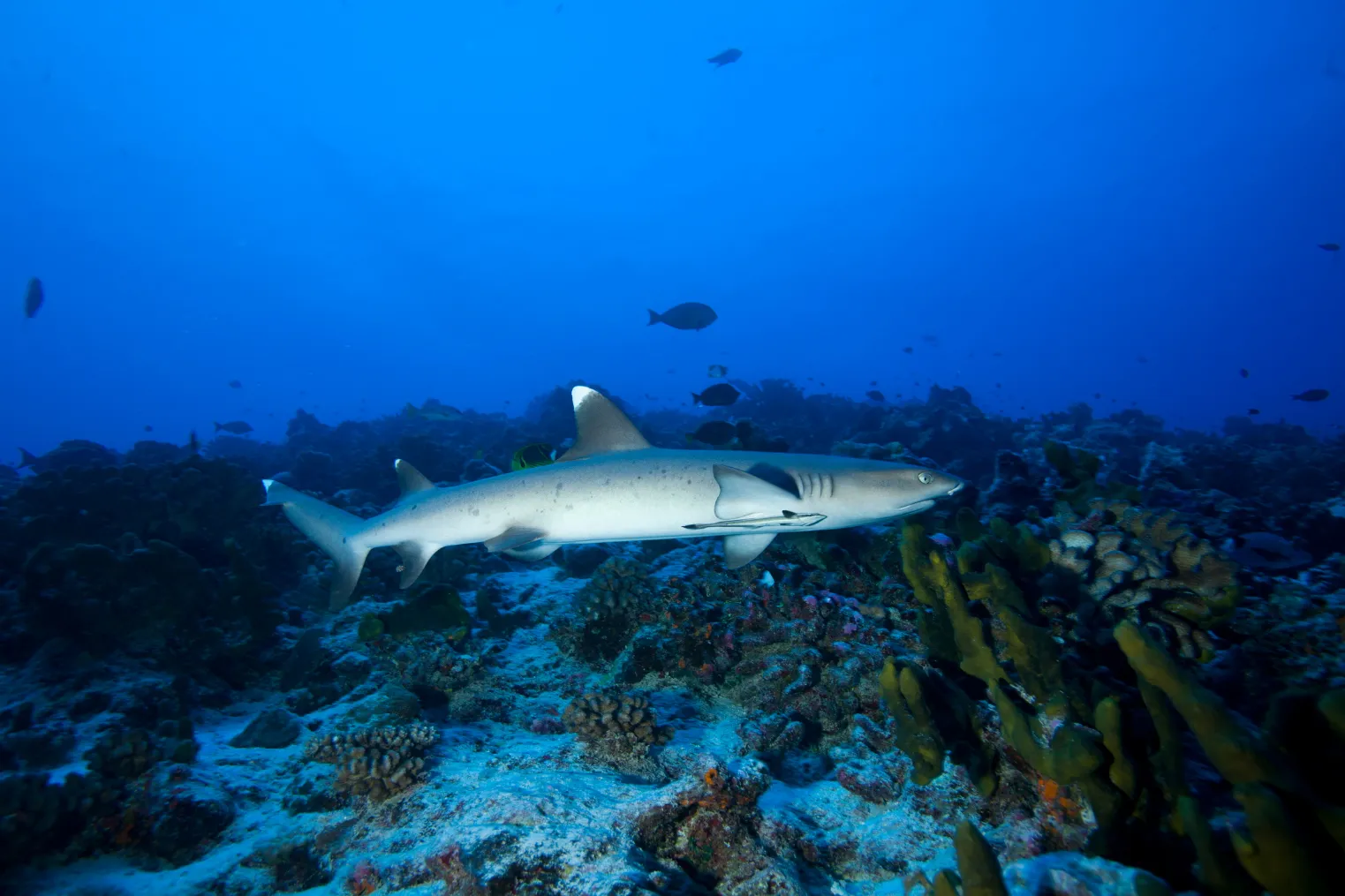
You slide off a Hanauma Bay-style reef ledge at sunrise and spot a small shark tucked under a coral shelf, then another one cruises the sandy edge like it owns the place. If it’s stocky with a blunt nose and rounded white-tipped fins, you’re likely looking at a whitetip that loves caves and naps, but if it’s sleeker with crisp black fin tips, it’s probably a blacktip that keeps moving and keeps its distance. Stay calm, hover back a few fin kicks, and check the fins, snout, and belly color, because the details can fool you when the water’s glassy and blue…
Key Takeaways
- Whitetip reef sharks have white fin tips, shorter rounded fins, and a blunt snout; blacktip reef sharks show black fin tips and a pointed snout.
- Whitetips are stockier and often rest in caves or under ledges by day; blacktips are sleeker and cruise shallow flats more continuously.
- Best viewing is dawn and dusk in clear, shallow water; whitetips often prowl ledges at night, while blacktips stay wary and mobile.
- In Hawaii, watch Oʻahu’s Hanauma Bay and North Shore ledges, Maui’s Molokini outer rim, and Kona reefs on calm mornings.
- Reduce risk by avoiding murky runoff and spearfishing areas; most Hawaii incidents involve larger species, not typical 5–6 ft reef sharks.
How Do You Tell White-Tip vs Blacktip Reef Sharks?
On a busy reef, think of fin tips as the shark’s name tag, they’re the quickest way to sort a whitetip from a blacktip when one glides past in the blue.
White-tipped dorsal and tail fins on a plain gray back point to a Whitetip Reef Shark, usually under five feet, with a blunt, broad head.
Black-tipped fin ends signal a Blacktip Reef Shark, similar in length but often sturdier, with a more pointed snout.
Use behavior as your backup: whitetips may rest by ledges or slip into caves, then loop back for a look, while blacktips stay skittish and cruise over shallow flats.
In Oahu waters, larger sharks like Galapagos sharks can also show up, so double-check size and overall build before you decide.
If you’re still unsure, match fin color with head shape, or confirm with a local field guide for reef sharks.
Where Can You See Reef Sharks in Hawaii?
Start by keeping an eye out along reef drop-offs, sandy channels, and shallow reef flats, because that’s where Hawaiʻi’s whitetip and blacktip reef sharks most often cruise when the light turns soft. You’ll spot a White-tip reef shark or a black-tip reef shark most often in clear, snorkel-depth water, usually under 30 ft/10 m, especially at dawn or dusk when the reef looks like a dim city street. On Oʻahu, calm, clear days can also bring sightings of reef sharks in popular nearshore spots like Waikīkī and Kāneʻohe Bay.
| Island | Reliable reef zones |
|---|---|
| Oʻahu | Hanauma Bay, plus North Shore ledges near Haleʻiwa |
| Maui | Molokini Crater’s outer rim, watch the blue edge |
| Big Island | Kona’s offshore reefs, calm mornings offshore |
To stack the odds, join a guide like Deep Blue Eco Tours for non‑chumming trips, and skip murky runoff, busy river mouths, or active spearfishing spots.
Hawaii Reef Shark ID Checklist: Fins, Snout, Belly
Start with the fin tips, because they’re the quickest giveaway when a shark glides past you in clear Hawaii water: blacktips show sharp black marks, while whitetips look like they’ve been dipped in white paint along the dorsal and tail edges.
Next, check the snout, since a blacktip’s is more pointed and the whole body looks sleeker, while a whitetip’s head feels shorter and blunter, and you’ll often spot it resting on the reef like it owns the place.
Finally, when you catch a look from below, use the pale belly as your backdrop, then compare how the dark fin tips pop against lighter fin bases on blacktips versus the clean white fin edges on whitetips.
On Oahu, sandbar sharks are often seen cruising sandy flats and nearshore areas and tend to be more active in open water than reef-resting whitetips.
Still comparing Hanauma Bay?
Ask for tour ideas, hotel suggestions, or a simple trip plan that combines both.
Trip Helper
Fin Tips And Shape
Dial in on the fin tips and overall shape, and you’ll sort Hawaii’s two common reef sharks faster than you’d think, even from a moving snorkel or a quick glance off a boat. In bright sun, those tips pop instantly. Look for black tips: blacktip reef sharks often show dark points on the first dorsal, pectoral fins, and tail, as if dipped in paint. Their fins look sharper too, with triangular edges that signal a more streamlined swimmer.
A whitetip reef skips the dark caps and may show pale edging on the trailing margins. Its first dorsal and pectorals sit shorter and broader, with rounded ends that read softer in silhouette, especially when it cruises slowly along a ledge. Unlike reef sharks, tiger sharks in Hawaii are more commonly associated with deeper channels and occasional nearshore appearances, so fin-tip ID is only one part of staying aware in the water. Tip: track fin shape, not your adrenaline.
Snout Profile And Belly
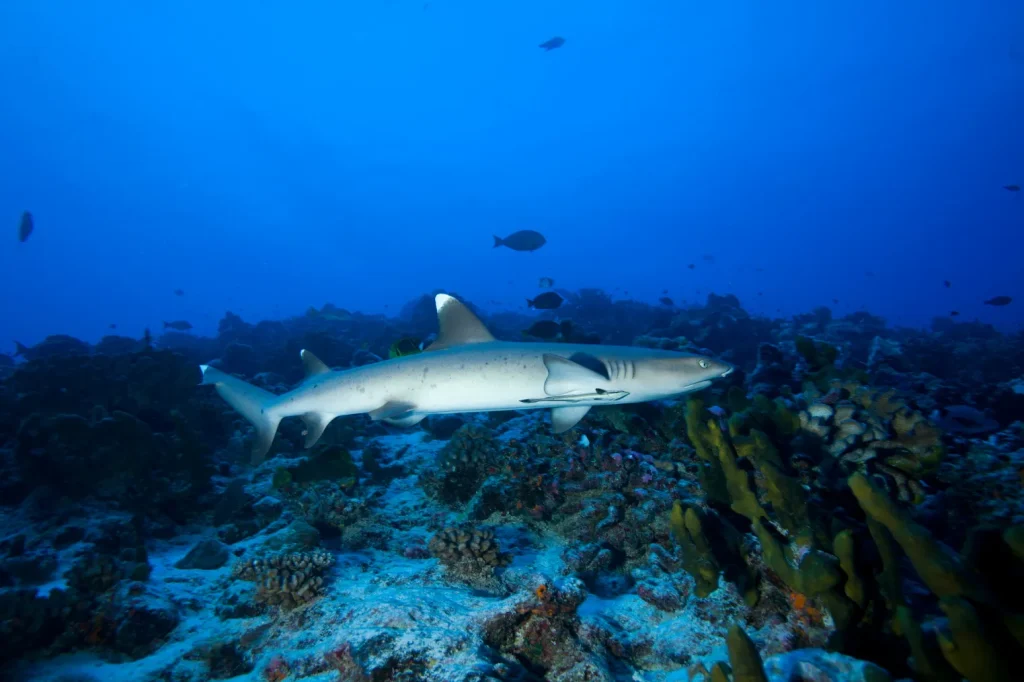
Once you’ve clocked the fin tips, shift your eyes forward to the snout and then down to the belly, because those two angles often seal the ID when the shark slides past in a lazy loop. A Whitetip looks blunt up front, with a short, broad snout like a rounded canoe bow, and its creamy underside can seem wide because the body’s deeper and stockier. A Blacktip shows a slimmer, pointier snout, plus a cleaner gray to white break, sometimes with a faint side band. On Oahu, shark researchers often use repeated visual ID cues like these alongside structured field observations to track individuals and behavior over time.
| Look for | Quick cue |
|---|---|
| Whitetip | Blunt snout, broader pale belly |
| Blacktip | Pointed snout, sharper belly line |
In clear water, watch the profile as it turns. If belly color fools you, pair it with fin tips for a sure call.
How Big Are Hawaii Reef Sharks (5–6 Ft)?
Most of the time, the reef sharks you’ll spot in Hawaii clock in at a very manageable 5 to 6 feet long, about the length of a tall adult or a longboard laid flat.
In the Reef, the two Shark species you’re likely thinking of are whitetips and blacktips, and their adult lengths differ a bit. Whitetips often stay under 5 feet, while blacktips more often reach that 5 to 6 foot range, so your “big one” sighting probably isn’t huge, just closer.
They start life tiny, pups measure roughly 13 to 23 inches, then grow fast in the first years. You’ll notice size at maturity comes early, around 3 to 3.7 feet, long before they top out.
Compared with tiger sharks, they’re compact.
If you’re also curious about other species, Hawaii has notable hammerhead seasons and sightings too.
White-Tip Reef Sharks in Hawaii: How to Spot Them
After you’ve wrapped your head around that 5 to 6 foot “reef shark” you spotted, it helps to know the smaller regular you’re far more likely to meet: the whitetip reef shark. Whitetip reef sharks are short and slender, usually under 5 feet, with a short broad head, a white-tipped dorsal fin, and a white-tipped tail. In Hawaii, ongoing research tracks their numbers because shark populations can be affected by fishing pressure and habitat changes.
Next time you spot a “reef shark,” it’s probably a whitetip reef shark, slender, under 5 feet, with white-tipped fins.
In shallow reefs, look for:
- Gray to brown on top, then a lighter belly when it banks under you.
- Slow, graceful swimming, sometimes close enough to spot its pointed snout.
- Daytime loafing on reef ledges or in caves, lying still in crevices.
You’ll see them near drop-offs, lagoons, and rocky outcrops. Hover calmly, keep your fins off the coral, and let it choose the distance.
Blacktip Reef Sharks in Hawaii: How to Spot Them
Often you’ll spot a blacktip reef shark cruising the shallows like it owns the place, a slim 5 to 6 footer with a pointed snout and those clean black tips on its dorsal and tail fins that pop against brown-tan skin.
Look closer as it turns, you’ll catch a pale belly and a light band along the flank, like a sunlit stripe from the anal fin toward the pectorals.
Your best odds come over shallow coral reefs and sand flats close to shore, especially in early light when the water reads like glass.
These sharks stick to small neighborhoods, so if you see one, hover quietly and it may loop back. This looping can look like curious passes as it circles to investigate its surroundings from different angles.
If it bolts, don’t take it personally, Blacktip reef tends to be shy.
Do White-Tip Reef Sharks Approach Divers?
On Hawaiian reefs, you’ll often spot a whitetip reef shark lying still in a cave or under a ledge by day, then, especially after dark, it may glide closer with a calm, curious look that feels more like a neighborhood cat than a nervous blacktip.
You can get a surprisingly close view, sometimes within a few meters, because its approach is usually slow and exploratory, not a fast, pushy charge.
Follow the no touch, no chase rule so you don’t crowd, grab, or pursue the shark and accidentally escalate the encounter.
Still, keep your hands to yourself, don’t corner it, and stay aware of your surroundings so the shark controls the distance and you both keep the mood relaxed.
Typical Diver Encounters
Slip into Hawaii’s clear, warm water and you might spot a whitetip reef shark doing its quiet patrol or tucked into a reef crevice, then easing closer with that calm, curious glide that feels more like a cautious cat than a charging predator.
Most Whitetip reef sharks you see are 5–6 feet, and diver encounters cluster on reef drop-offs, ledges, and cleaning stations, with light rippling like glass.
- A pale tail tip slipping under a coral shelf
- A slow loop tracing the reef’s blue edge
- A quick flash of fish at the cleaning spot
Blacktip reef sharks hang back a few meters, circling wide.
Hawaii enforces shark protections to support conservation and reduce human impact on these animals.
Keep hands to yourself, skip feeding, and avoid spearfishing splash or blood.
Stay calm, breathe slow, hover.
Curiosity Vs Caution
While you might expect a reef shark to keep its distance, Hawaii’s whitetip reef sharks can do the opposite, gliding in calmly to take a closer look when you stay still and give them space.
On a night dive, you’ll often spot a White-tip reef shark nosing along a ledge, then looping back within a few meters, as if your bubbles are just another reef sound. Keep your fins quiet, angle your light off their eyes, and don’t carry fish or bleed, and the encounter stays relaxed. On Oahu shark dives, it’s normal for sharks to pass within a few meters when conditions and diver behavior stay calm.
A Blacktip reef shark usually plays it cooler, it cruises the blue water and darts away if you wave or splash. Treat that caution as a cue to slow down, and you’ll earn more curiosity, not chaos.
Do Blacktip Reef Sharks Avoid People?
Most of the time, blacktip reef sharks in Hawaii avoid people, and if you spot one in the clear, sunlit shallows it’ll usually angle off with a quick flick of its tail instead of coming closer.
Blacktip reef sharks are 5 to 6 feet long, prefer a shallow coral reef, and stay skittish around humans, so you usually get a brief look as they cruise alone or in loose groups.
In clear water you’ll often spot them first, so glide, don’t chase, and keep fins quiet.
On shark dives off Oahu, you may also spot other marine life sharing the same reef and open-water zones.
- A shadow skims a sandy channel.
- Two tails trace the reef edge, then turn out.
- A fast pivot after a splash.
Avoid splashing, chum, and spearfishing, and follow local guide rules for calm, controlled sightings.
What Do Reef Sharks in Hawaii Eat?
Often, reef sharks in Hawaii eat what the reef serves up in easy reach, mostly small reef fish cruising over coral heads and along rocky ledges, with a side of crabs, shrimp, and the occasional bite-size squid or octopus.
If you’re snorkeling a lagoon or peering over a drop-off, you’re watching a menu built around reef fishes, the bulk fuel for both the white-tip reef shark and the blacktip reef shark.
Younger sharks tend to pick off smaller, bottom-hugging snacks like crustaceans and tiny fish, while adults graduate to larger fish and heftier invertebrates. They’re practical hunters, so they’ll also scavenge carrion or nab discarded catch near fishing spots, think of it as the reef’s version of takeout.
They can also use electroreception to detect the tiny electrical signals given off by hidden prey in the reef.
Tip: don’t chum or feed them.
When Are Reef Sharks in Hawaii Most Active?
Usually, reef sharks in Hawaii ramp up their cruising at dawn and dusk, when the reef slips into low light and small fish start shifting between hiding spots and open water. You’ll often spot whitetips hugging ledges and blacktips tracing the drop off, then staying busy into the night, when vision and electroreception help them track meals. Divers and snorkelers who understand shark behavior are more likely to anticipate these activity peaks and choose calmer conditions.
At dawn and dusk, Hawaii’s reef sharks cruise harder, whitetips hug ledges, blacktips trace drop-offs, hunting into the night.
Picture it like this:
- A pink sunrise, glassy water, quick patrols along the coral.
- Midday sun, steady movement from 0600–1800, especially near baity points.
- A rainy, turbid afternoon, when murk gives them better cover and they circle closer.
If you’re planning a swim, aim for clear days, and ask locals about seasonal food pulses or mating weeks that can draw loose groups nearby reefs.
Are Hawaii Reef Sharks Dangerous?
Those dawn and dusk patrols can look a little intense from the surface, but Hawaii’s reef sharks aren’t the headline danger most swimmers imagine.
A whitetip reef shark is usually under five feet, and a blacktip reef shark often tops out around six, so they tend to cruise like cautious neighborhood dogs, not charging hunters. Hawaii sees about three to four shark attacks a year, and the worst ones usually involve bigger tiger or Galapagos sharks, not these reef regulars. Most incidents are rare and often linked to higher-risk conditions like low visibility, limited escape routes, or people being in the water at peak shark activity, key shark safety factors to keep in mind.
You’ll raise the odds in murky runoff water or around speared fish, because bites usually come from curiosity or provocation.
Protecting vulnerable slow-breeding reef sharks through smart fishing limits and calm tourism keeps encounters predictable, and lets you enjoy that clear-water glide with perspective intact.
Snorkeling With Reef Sharks: Safety Rules
In the clear, blue pause between wave sets, snorkeling with Hawaii’s reef sharks can feel like sharing a quiet lane with confident locals, as long as you follow a few simple rules.
Start by picking clean, calm Hawaiian waters, skip river mouths, jetties, and brown runoff after heavy rain, since most recorded attacks happened in turbid water.
Humans aren’t typical prey, because reef sharks key in on natural prey cues like fishy vibrations, erratic movement, and scent trails rather than calm swimmers.
- Swim with friends, shoulder to shoulder, so you’re never the lone splash in a big bay.
- Leave the spearfish, stringers, and any bleeding cuts on land, you don’t want a dinner bell.
- If one cruises close, stay calm, keep eye contact, and back toward shore or your boat without thrashing.
For extra confidence, book a licensed guided tour, they’ll brief you and plan emergencies.
What Reef Sharks Do for Hawaii’s Reefs
Glide over a Hawaiian reef for a few minutes and you’ll notice reef sharks acting like quiet managers of the neighborhood, keeping the whole place running smoothly.
A White-tip reef shark noses into cracks at dusk, picking off crabs, small fish, and squid, while a Black-tip reef shark cruises the shallows for nervous prey. By taking the weak and sick, they keep schools friskier and lower disease spread. Their patrol makes grazers keep moving, so parrotfish and surgeonfish don’t camp, and algae struggles to smother coral reefs. Coral reefs support about 25 percent of marine life, so keeping them balanced matters far beyond the reef edge. Many sharks stick to the same ledges and channels, so you can revisit a spot on your usual snorkel or dive and notice steadier, more diverse life. Tip: scan sandy edges and coral heads, especially near dusk.
How Reef Sharks Are Protected in Hawaii
Stewardship shapes the way reef sharks live around Hawaii, and you can feel it in the calmer rhythm of protected bays where fishing pressure drops and reefs stay busy. The state backs that vibe with Marine Life Conservation Districts that limit gear and harvest, plus rules that ban taking some sharks in certain zones and set size or seasonal limits to cut bycatch. Around Oahu, Marine Protected Areas can also shape where and how tour operators run trips, encouraging wildlife-first viewing practices near sensitive reefs.
Stewardship reshapes Hawaii’s reef-shark life, calmer protected bays, Marine Life Conservation Districts, and smart limits that ease pressure and cut bycatch.
On the water, you’ll notice:
- Quiet no-take pockets where parrotfish crunch and sharks cruise the edge.
- Patrol boats, permits, and locals who’ll report lines.
- Dive guides in Haleʻiwa swapping hooks for cameras, making conservation pay.
Researchers tag and survey sharks, then managers tweak protections so you can snorkel, keep distance, and leave the reef as you found it.
Frequently Asked Questions
How Long Do White-Tip and Blacktip Reef Sharks Live?
You’ll typically see whitetip reef sharks live about 20–25 years, while blacktips often reach 20–30. Expect lifespan variation from fishing and habitat; aging methods refine estimates, and juvenile survival strongly shapes averages in Hawaiian waters.
Do Reef Sharks Migrate Between Hawaiian Islands?
Birds of a feather stick together, you’ll find most reef sharks don’t migrate between islands. They stay loyal to one reef, making only seasonal movements nearby. Rare crossings follow habitat corridors, so genetic connectivity remains limited.
Can You Photograph Reef Sharks at Night in Hawaii?
Yes, you can photograph reef sharks at night in Hawaii on night dives. Use low light techniques: steady 500–1,000+ lumen lights, high ISO, fast lens, 1/30–1/125s. Keep distance, avoid chum, and use remote strobes sparingly.
Are White-Tip and Blacktip Reef Sharks Ever Kept in Hawaiian Aquariums?
Better safe than sorry: yes, you’ll sometimes see whitetip and blacktip reef sharks in Hawaiian public aquaria, where staff follow quarantine protocols. You won’t find them with most private collectors, thanks to permits and rules.
What Should You Do if a Reef Shark Circles You Repeatedly?
Stay calm, maintain eye contact, and keep your movements slow if a reef shark circles you. Back away toward shore or boat without turning, stay close to buddies, and slowly leave when it’s safe now.
Conclusion
You can tell Hawaii’s reef sharks with a quick, calm scan, white-tip is the stocky cave-snoozer with rounded white tips, blacktip is the sleek cruiser with sharp dark fin edges. Watch from a respectful distance, move slowly, and let your exhale do the talking, the less splash, the more you’ll see. It’s simple: look, listen, linger, then leave the reef as you found it, and everyone wins.


