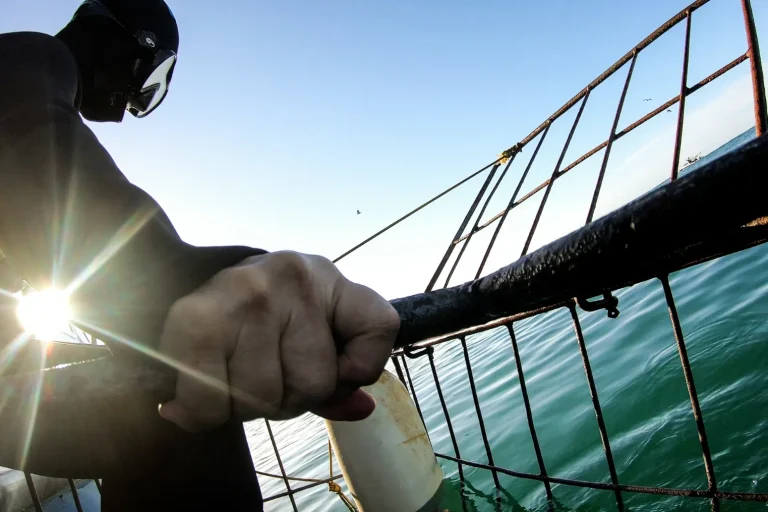
You don’t have to let a small boat turn your stomach into a drama queen. You can stack the odds in your favor with a few smart moves. Sit midship and low where the ride feels calmer. Face forward and lock your eyes on the hard line of the horizon. Stay on deck in cool air away from fuel stink, sip water, and skip the phone screen. But what do you do when the first wave hits wrong?
Key Takeaways
- Sit midship near the centerline and low on the main deck; avoid the bow where pitching and slamming are strongest.
- Face forward and fix your gaze on the distant horizon; keep your head still and use peripheral vision instead of close-up focus.
- Avoid reading, screens, maps, and camera adjustments while underway; frequent close-focus tasks worsen visual-vestibular mismatch.
- Stay on deck in fresh air, keep cool, and move upwind from engine exhaust; warm cabins, fumes, and overheating amplify nausea.
- Eat a light snack pre-trip, hydrate in small sips, and consider ginger, wristbands, or meclizine 30–60 minutes before departure.
Pick the Most Stable Spot to Avoid Seasickness
On a small boat, where you sit can feel like the difference between a gentle sway and a runaway washing machine.
On a small boat, your seat is the difference between a gentle sway and a spin cycle gone rogue.
For the calmest ride, sit near the boat’s center, right at the center of the boat, or midship. Stay low on the main deck near the waterline, where the hull feels planted and the engine hum sounds steadier. If you can, perch on or just aft of the centerline. Straddle a bench and brace your feet so the deck’s texture and motion stay readable.
Before you head out, assess boat ride conditions to the shark site so you can choose your seat with the sea state in mind.
In chop, avoid the bow and skip forward cabins. That front section pops up and slaps down like a drum.
When you’re underway, face forward and keep the horizon in view while you sip water and enjoy the spray.
Watch the Horizon to Stop Sensory Mismatch
You can calm your brain fast by fixing your gaze on the distant horizon, where the sky meets the water and the engine’s hum starts to feel steadier.
Skip close-up tasks like phones or books and keep your head still and facing forward so you don’t trigger that queasy sensory mismatch again.
Pick a spot with a clear horizon view like midship on deck, and if fog or night rolls in use distant lights or the boat’s wake as your far-off reference while you keep your peripheral vision open.
On Oahu shark dives, the same horizon-focusing approach is often recommended as one of the most effective seasickness prevention tactics on small boats.
Horizon Fixation Calms Brain
When the deck starts rolling like a slow dance, give your brain a steady anchor by locking your eyes on the distant horizon. That far line tells your inner ear the same story, so the visual-vestibular conflict eases.
Try to sit mid-ship where the thumps and sways feel softer and you can see sky meet water without railings in the way.
Keep your peripheral vision wide, not squinty, and stay in fresh air on deck if you can. If spray or fog hides the horizon, face the boat’s direction and choose a fixed point on the water or a headland.
And yes, you should avoid near-field tasks for now, because close-up focus makes the wobble feel louder. Listen to waves, breathe, and settle in.
Before you splash in, eat and drink right so low blood sugar or dehydration doesn’t amplify nausea on the ride out.
Avoid Close-Up Visual Tasks
That horizon trick works best if you stop asking your eyes to do tiny, close-up jobs while the boat keeps moving. Reading on a boat, scrolling your phone, or fiddling with camera dials locks your gaze on a still page. Your ears feel the pitch and roll, and that visual-vestibular mismatch can turn your stomach fast.
When the boat’s underway, keep your eyes on the horizon or any distant object that holds steady. Sit midship, face forward, and stay on deck where you can hear the wake hiss and feel the breeze. If you must check a screen, look up every few minutes for 10 to 20 seconds. It’s like giving your brain a quick compass reset, minus the sailor hat on choppy days. If nausea spikes anyway, pause, take slow breaths, and use a panic survival plan mindset to keep symptoms from snowballing.
Still comparing How To Avoid Motion Sickness Triggers On Small Boats?
Ask for tour ideas, hotel suggestions, or a simple trip plan that combines both.
Trip Helper
Choose Clear Horizon Views
Why does the horizon feel like a magic switch on a small boat? Because your brain loves teamwork. When you keep your eyes fixed on the distant horizon, your inner ear and eyes agree, and the queasy argument fades. Checking swell period in surf and marine forecasts can help you anticipate the long, rolling motion that often worsens nausea.
Claim a steady horizon view by setting yourself up like a seasoned deckhand:
- Sit in a forward-facing position near the centerline at midship. You’ll feel less roll and hear the bow slap soften.
- Skip screens and maps. You must avoid close-focus activities while underway, even that “quick” text.
- Lift your head and use peripheral vision. If rails block the view, step to the highest deck and face the travel direction. Waves, wind, and sky do the rest. Hold on, breathe, and enjoy.
Get Fresh Air and Avoid Fumes and Heat
When the boat starts to sway, you’ll feel better if you stay on deck and let a cool breeze hit your face while the horizon slides by.
You can also dodge trouble by moving upwind from the engine and any exhaust vents, because even a faint diesel whiff can flip your stomach fast.
If the cabin feels warm and still, crack a hatch, grab some shade, and keep your clothes light so you don’t end up sweaty and woozy like you just ran a mile on a floating sidewalk.
Before any ocean outing, especially in Hawaii, check current beach conditions so you’re prepared for changing seas.
Seek Fresh Air
Out on deck, the air feels cooler and cleaner, and your stomach usually thanks you for it.
When seas get bouncy, stay on deck in the fresh breeze and keep it open-air. Plant yourself upwind so engine exhaust trails behind you instead of into your nose. Aim for a cool steady airflow on your face, from a shaded seat or a small fan. If you feel the first wobble of nausea, walk to the bow or midships, find a clear horizon, and take slow breaths. North Shore mornings can be calmer before the trade winds build, so aim for an early departure when possible.
- Salt spray on your lips.
- Rope thump and gull calls overhead.
- Wind ruffling your shirt, not your gut.
Skip the below-deck cabin unless you must. You’ll notice the boat’s rhythm makes more sense out there anyway.
Avoid Heat And Fumes
Keeping your body cool and your nose happy can stop queasiness before it starts. Claim the deck and hunt for fresh airflow. Take an upwind position so the breeze feels like a small fan on your face and salt dries the sweat.
Watch the stern. Engine exhaust likes to hang around the transom, especially at idle, so sit forward of the cockpit and avoid fumes. If you duck below, keep open vents and crack a hatch to keep air moving. Heat builds fast in a cabin, and overheating can flip your stomach. Wear light clothes, add a hat, and look for shade and ventilation. If fuel, bilge, or galley smells hit you, move to a cooler spot and lock onto the horizon out there. If you’re on a shark dive boat, ask the crew about crew roles so you can stay clear of exhaust-heavy areas while they manage procedures safely.
Eat Light and Hydrate to Prevent Seasickness
Often, the easiest way to dodge seasickness starts before you ever hear the dock lines slap the cleats. You’ll feel steadier if you eat a light meal 1 to 2 hours before boarding, enough to calm your stomach but not crowd it.
Choose toast, a plain bagel, or plain crackers, and avoid greasy foods, spicy bites, and big portions the night before. Aim for 8 to 16 ounces beforehand.
For Hawaiian boat tours, many travelers choose between Dramamine vs ginger for motion sickness support.
- Fill a bottle and sip clear fluids on the ride to the marina.
- Keep drinking small sips so you stay hydrated as the hull creaks.
- Skip the bar cart and avoid alcohol and heavy coffee for a day.
If you like the taste, chew ginger root, or take ginger suplemento with water.
Take Ginger, Bands, or Meds Before Boarding
Dial in your defenses before you even step onto the dock. Take 1 to 2 grams of ginger about 30 minutes before boarding, as capsules, candied bites, or a warm tea you can smell while lines clink. Many travelers find it settles nausea without fuss. Slip on acupressure wristbands, like sea-Bands, and place them over the P6 point on both wrists before the first swell. For nervous swimmers heading out for shark dives in Oahu, building dive confidence with a calm, step-by-step pre-boarding routine can help keep nausea triggers in check.
For longer runs, take meclizine or Dramamine 30 to 60 minutes ahead, and plan for sleepier eyes. If you need stronger coverage, ask your doctor about a scopolamine patch behind the ear at least 4 hours early. Then claim a steady spot midship and test your setup on a short outing. Pack water and a mint, just in case.
If Seasickness Starts: Step-by-Step Reset
When your stomach starts to flip, don’t tough it out, switch into reset mode. Move midship near the waterline and sit or lie down where the boat feels strangely calmer.
- Step onto deck, face the breeze, and lock your eyes on the horizon for a few minutes. Let the gulls and swells line up again.
- Take help early: 25 to 50 mg meclizine now, or use scopolamine if you already applied a patch hours ago.
- Sip ginger tea or clear fizzy water, then nibble crackers like you’re sampling a bland new cuisine.
Remember that water conditions can shift fast in dynamic natural environments, so stay aware of your surroundings while you reset.
If seasickness keeps buzzing, close your eyes, keep your head still, and do deep breathing for 10 to 15 minutes. Skip screens and the “sympathy puker” show until your balance clicks back.
Frequently Asked Questions
How Long Does Seasickness Typically Last After Getting off the Boat?
You’ll see immediate symptoms fade within hours; typical duration is 6–24 hours, though delayed symptoms can linger 48–72. Recovery timeline improves with hydration effects and sleep influence; use the medication window, then ease activity resumption.
Are Children More Prone to Seasickness Than Adults on Small Boats?
Yes, you’ll see children get seasick more than adults because age-differences and immune-development amplify sensory mismatch. Help by boosting visual-focus, calming baseline-activity, limiting motion-exposure, protecting sleep-patterns, watching hydration-status, and respecting medication-sensitivity on small boats, too.
Can Anxiety or Fear Make Motion Sickness Worse While Boating?
Yes, anxiety amplification can worsen motion sickness: you’re triggering anticipatory nausea, pump stress hormones, and spiral into panic induced dizziness with hypervigilant symptoms. Counter fear conditioning using cognitive distraction, breathing, and avoid avoidance behaviors onboard today.
Do Rougher Seas Always Cause More Seasickness Than Mild Swells?
No, rougher seas don’t always make you sicker; wave frequency, visual cues, and boat size shape vestibular mismatch. Your personal susceptibility, alcohol use, medication timing, and adaptation time can let mild swells hit harder sometimes.
Should I Avoid Boating if I’M Pregnant or Have Inner-Ear Problems?
Yes, consider skipping pregnancy boating, especially first trimester; prioritize prenatal safety and get obstetric consultation about medication interactions. If you’ve got inner ear or vestibular disorders, or a ear infection, avoid until cleared; do balance exercises.
Conclusion
You’ve got options when the water gets bumpy. Claim a low, midship seat and face forward. Lock your eyes on the horizon and let it be your steady metronome. Stay on deck in cool air and dodge engine fumes and sticky heat. Eat a light snack and sip water before you cast off. Try ginger, wristbands, or a dose of meds early. If nausea hits, reset fast and breathe.