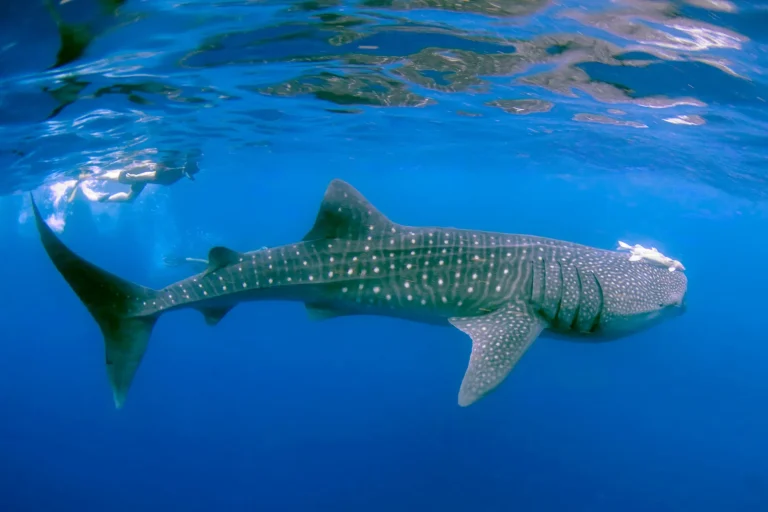
Like a scene from a Cousteau reel, you drop in off Oahu and the ocean goes quiet except for your bubbles. You tuck your arms, keep your gear close, and lock into a tight back-to-back circle with about a meter of space. On a hand signal, you pivot as one clean unit, no solo dashes. Your camera stays clipped, strobes low, and you take quick turns so nobody hogs the moment. Then the first shadow slides in and you’ve got a choice to make…
Key Takeaways
- Form a tight back-to-back circle, keep 1–1.5 meters spacing, and match group depth within about 1 meter.
- Keep arms and camera tucked to your chest; avoid reaching forward or blocking another diver’s viewing window.
- Follow the guide’s hand signals; freeze on “stop” and drift back smoothly when told, never chase sharks.
- Pivot together on 90°/180° turn signals, rotate front spots clockwise in brief turns, and pause rotations when sharks approach closely.
- Use strobes sparingly or off unless cleared, take turns for 30–60 seconds of clear framing, and secure cameras before exits.
Follow Shark Dive Oahu Etiquette (Quick List)
A good group shark dive off Oahu feels like a calm little dance in blue water, and your etiquette keeps it that way.
You settle into a tight circle with your back toward the center, eyes bouncing between the dive guide and the gray shapes cruising by. Stay within view of the boat and safety divers. Keep about an arm’s length from your neighbor so fins don’t tap like clumsy castanets.
When the guide signals a turn, you kick slow and together, then stop. Don’t dart off solo.
Use clear hand signals and only move when the guide or safety divers confirm, so the whole group stays coordinated.
Keep your camera clipped or pointed down until you’re cleared to shoot. Frame slowly, skip the flash, and don’t reach.
If someone calls “close,” tuck hands and gear in, tighten up, and follow instructions right now.
Set Shark Dive Oahu Spacing and Sightlines
Once you’ve got the basic etiquette down, spacing and sightlines are what make the water feel wide open instead of crowded.
Before you enter, confirm your life jacket plan and who to follow for entry and exit so the crew can keep the group orderly.
For your shark dive, form a tight circle with 1 to 2 meters between divers, backs angled toward each other so your view stays outward. Match the group’s depth within about a meter, and keep that horizon flat and calm.
Tuck your hands and camera close like you’re holding a postcard in a breeze.
Don’t reach forward or you’ll steal someone’s window. When the guide calls for a turn, pivot together in a slow 90 or 180, keeping spacing steady.
If you must adjust buoyancy or grab gear, signal and drift to the boat side edge so you don’t cut across anyone’s sightlines.
Read Shark Dive Oahu Shark Signals: Then Back Off
While the sharks slide in like gray shadows under the surface glare, your best tool isn’t your camera or fins, it’s the crew’s hand signals. In the briefing, learn your dive operator’s signs for stop, move in, surface, and shark direction so you can answer fast without bubbles or yelling.
| Signal | You do |
|---|---|
| Stop | Freeze and watch |
| Back off | Hold, drift back slowly |
| Back off twice + point | Add several body lengths |
| Emergency tap | Call it only for arched backs, dropped pecs, darting bursts |
If you feel panic rising, switch to slow breathing and lock onto the guide’s signals before you make any sudden moves. If you’re shooting, drop the camera, kill the flash, and don’t chase “one more frame.” Read shark body language like a streetlight, then give space with smooth fin strokes. When guide waves you off, you obey, no questions, no splashing.
Keep Shark Dive Oahu Formation Tight and Calm
Lock into a tight circle with your backs to each other and keep about 1 to 1.5 meters between divers, like you’re closing ranks for a group photo that swims.
> Form a tight back-to-back circle, spacing divers 1–1.5 meters apart, like a group photo that swims.
You’ll see every shark slide past, and they’ll read your shape as calm, not cornered prey.
Breathe slow and steady, and keep your arms tucked so you don’t slap the water like a nervous paddle.
To follow ocean etiquette, move calmly and float instead of thrashing so the group stays steady around sharks.
When a shark angles in, pivot together on the guide’s hand signals for a clean 90 or 180.
Stay near the safety rope or float and hold buoyancy so kicks don’t open gaps beyond 1.5 to 2 meters.
Keep the captain or safety diver within arm’s reach.
Dive operators love this, and your shark diving will feel safer today.
Still comparing Shark Dive Oahu Etiquette For Groups: Spacing, Turns, And Camera Courtesy?
Ask for tour ideas, hotel suggestions, or a simple trip plan that combines both.
Trip Helper
Rotate Front Spots Without Rushing the Sharks
If you want everyone to enjoy that front-row view without turning the water into a scrum, set a simple rotation plan before you drop in. Go clockwise around your tight circle and rotate front spots for 30 to 60 seconds each. You’ll feel the current tug your fins and hear bubbles hiss while Galapagos or sandbars glide 5 to 10 feet out. Keep 3 to 5 feet between divers and flow along the outside rim, never cutting the middle. Move slow and keep eyes on the shark’s space so nothing looks like a chase. For smoother group flow, confirm your operator’s group rotation policy during the pre-dive briefing.
| Where | What you do | What you see |
|---|---|---|
| Front | Hold steady | Grey backs cruise |
| Edge | Slide around | Sand ripples below |
| Back | Reset | Cameras wink |
When one sweeps in, pause rotations, tighten.
Announce Position Changes Before You Move
Because the circle stays calm only when everyone moves like one unit, you’ve got to announce position changes before you drift an inch.
In shark dive etiquette, announce position changes before you move.
Say it clearly two seconds early: “shifting left two feet” or “standing up to adjust fins.”
Underwater, use the prebriefed hand signal.
Point to the spot, thumbs-up, or tap your buddy’s shoulder.
If you rotate inside the group, call direction and distance: “turning clockwise 90°.”
That keeps you from crossing the sharks’ focal area or the bait line.
Heading to the boat ladder or exit rope? Announce it, pause, then slide over while crew scans and clears a corridor.
This matters even more on a cage-free shark dive where the group’s formation is your main safety buffer.
Avoid sudden depth changes.
Say, “going down three feet,” and move slow.
Use Cameras Politely (Limit Strobes and Reach)
When you lift your camera in the blue water, keep strobes off or on low unless the guide says otherwise since sudden flashes can spook sharks and throw off the calm rhythm.
Keep your rig close to your chest and skip long poles or extended selfie sticks so you don’t bump a shark or crowd someone’s mask view in the tight circle.
Take turns for the best angles, stay just behind or beside the guide, and tuck away loose straps so nothing flaps like a snack in the current.
On the boat, rinse and dry your housing and keep it out of direct sun, securing it in a padded spot to prevent camera damage from bumps and salt spray.
Limit Strobes And Lights
Even though your camera feels like the star of the trip, sharks deserve a calm stage. Use your strobe for essential, low-power bursts, not a disco. Hold it at least an arm’s length from the shark and angle it away from the face so you don’t blast glare or force awkward eye contact. Check with the boat’s photographer and your pod before any flash, then stick to one simple cue so strobes don’t pop together. Choosing responsible operators also means following their photo-and-light rules to minimize stress on wildlife.
| Gear move | When to use | Group cue |
|---|---|---|
| Low-power strobe | Dark moments only | OK sign |
| Red video light | Brief close filming | “Light” |
You’ll hear bubbles, and the water stays peaceful. Between takes, dim or shut lights. If a shark tugs your rig, stop filming, stow it, and tell the guide.
Keep Cameras Close
Set your camera up close and keep it there, like a passport you don’t want to lose in the surf. Clip it to a wrist strap or short lanyard so it won’t dangle, snag gear, or look like a toy to curious sharks. Keep it tucked to your chest and aim down or forward so you respect a one-meter buffer. On Oahu shark dives, prioritize ambient light and minimize strobe bursts to reduce backscatter and avoid startling sharks.
Frame fast and smooth most days. Then lower the camera and relax. Follow the operator’s rules and hand signals, and ask before you shoot other guests. Skip baiting or scene-setting, even as the water hums around your mask.
- Use ambient light or low video lights.
- Keep elbows in, don’t reach.
- Check lanyard before you drop.
- Point lens forward, not sideways.
Take Turns For Shots
Usually the best shark photos come from patience, not a camera free-for-all.
In a small group, you’ll take turns in pairs or trios so each person gets 30 to 60 seconds of clear water to frame the glide of a gray shape and the flick of a tail.
Give a quick hand signal to your guide or buddy, then shoot, then yield when the next diver signals their turn.
If you’re debating whether to buy the boat’s photo packages, remember that courteous turn-taking often matters more than any add-on for getting clean, unobstructed frames.
Use strobes like salt, not like fireworks.
Fire only when you need it, then switch off or cover the lights between shots.
Keep your rig at arm’s length and skip long poles that can bump fins or tangle lines.
Move slowly, hear your bubbles, and slide right back into the circle as sharks drift closer.
Handle Rule-Breakers Without Escalating Risk
When someone in your group starts drifting too close to the sharks or slicing through the circle like they’re late for a dinner reservation, you don’t have to play underwater police. Watch shark behavior and keep your kicks small so the water stays clear. Stay in line-of-sight with the dive guide’s hand signs. If a diver keeps breaking spacing, don’t confront them. You’ll keep distance, rebuild the circle, and alert the guide. Conditioning can increase the likelihood of sharks approaching boats, so keep the group tight and predictable and follow responsible practices to reduce risk.
When someone drifts toward the sharks or cuts the circle, skip the policing, stay calm, keep visibility clear, and alert the guide.
- Flash the agreed attention signal to the guide, not the diver.
- Use buddy signs to point out their location if the guide’s busy.
- Never chase, touch, or restrain them. Shift to restore the tight circle.
- For reckless cameras, signal camera-down or thumbs-down, and safely block their view.
If it continues, end it.
Exit Together and Debrief the Shark Dive Oahu Run
When the captain signals, you exit the water as a tight group in two staggered waves, then glide shoulder to shoulder to the ladder with your mask and camera secured and ready to hand off. You climb aboard in the pre-assigned order so the deck stays calm and the only loud sound is the ladder clank, not a frenzy of fins.
Once you’re seated, you stick around for a quick 5 to 10 minute debrief on shark behavior, safety notes, and any rule-breaking you spotted, plus photo options before the boat heads out. This is also a good moment to confirm everyone completed the check-in process before the boat ride continues.
Exit As A Group
After the captain or lead guide gives the exit signal, you’ll head for the ladder as one tight, coordinated group within about 30 to 60 seconds. You’ll exit the water as a coordinated group with buddies at arm’s length, about 1 to 1.5 meters, so the crew can count heads fast and the sharks stay calm in the blue. Keep splashes low, hear the bubbles fade, and feel the current tug as you glide in. On a private shark dive charter, the lead guide will usually call the exit timing so your group surfaces and boards together without disrupting the flow of the run.
- Use one clear exit sign like a raised hand or thumbs-up
- Swim in a neat line toward the ladder with your buddy
- stagger ladder boarding in two quick waves to steady the boat
- Clip or hand up cameras last so the rungs stay clear always
Post-Dive Safety Debrief
Your group reaches the ladder as one calm unit, and the job isn’t finished yet. Wait for the captain’s signal, tighten your formation, and climb in the two-group slip-in/out method.
You move quietly while the motor is killed and the crew steadies the boat. Exit within your allotted 20 to 60 minutes so safety divers can track everyone and spot a loose fin strap or a woozy face.
Once on deck, lean into the post-dive debrief. report any unusual shark behavior. Also flag gear issues or any contact so the crew can log time, species, and depth.
Confirm photo and media preferences, hear notes on spacing and turns, rinse and stow rentals, then sign forms and leave a thoughtful review for your next run. A well-run boat will also have CPR and first aid gear onboard to respond quickly if anyone feels faint or gets hurt after the dive.
Frequently Asked Questions
What Should I Wear for Warmth and Comfort During the Shark Dive?
Wear a thin 1–3 mm dark wetsuit or shorty over thermal layers, plus a snug rash guard. Add neoprene socks, fitted fins, and a sealed mask. Skip shiny jewelry; bring a towel for boat rides.
Can I Bring Seasickness Medication, and When Should I Take It?
Yes, you can bring seasickness meds; comfort beats regret. For motion sickness, nail timing dosage: take meclizine or dimenhydrinate 30–60 minutes before departure, or use a scopolamine patch the night before. Avoid alcohol; tell crew.
Are There Age, Health, or Swim Requirements to Join the Group?
You’ll need to swim confidently and tread water/snorkel unassisted. Expect age limits (often 8–12) and minors must go with an adult. You must disclose health issues; some conditions require medical clearance or you can’t join.
What Happens if I Lose a Mask, Fin, or Camera Underwater?
If you lose a mask, fin, or camera, you’ll stay calm, stop finning, surface if needed, and give the retrieval signal. Crew handles lost gear recovery; you may end without dive penalties, per replacement policy.
How Do Tipping and Gratuities Work for Guides and Boat Crew?
Think of tipping as your thank-you anchor: you’ll give 15–20% (about $22–30 on $150) in cash at trip’s end. Add $5–10 per crew for service. Ask about cards, note Cash etiquette, and leave Service reviews.
Conclusion
Hold your back to the circle and keep that 1 to 1.5 meter gap. You’ll feel the slow hiss of your regulator and see sand drift like smoke below. When the guide signals a turn, pivot together and keep your hands tucked. Let cameras take turns and keep strobes low. One neat stat to remember: sharks can detect a drop of blood in about 25 gallons of water. Exit as a team and laugh softly on the boat.