
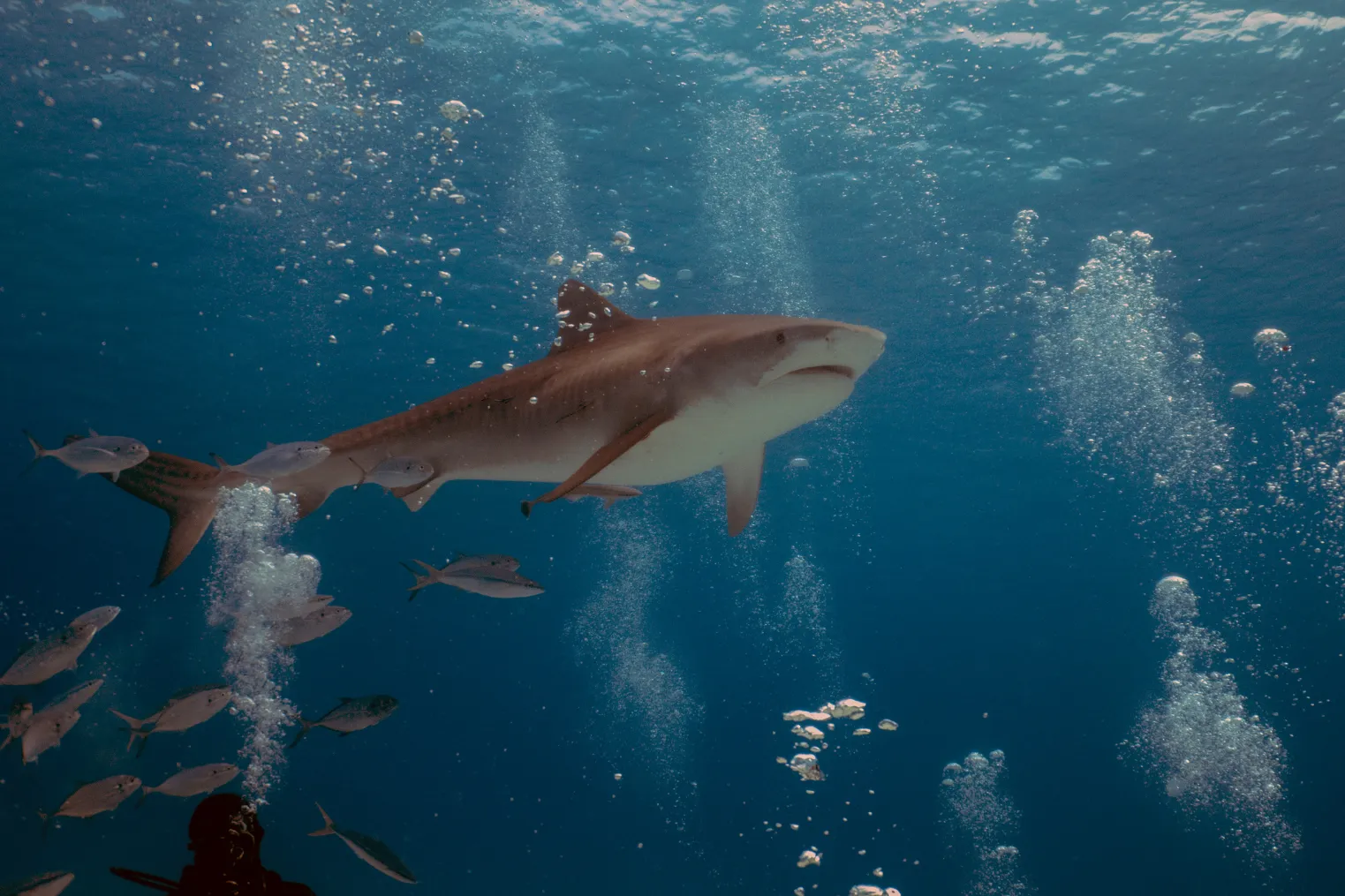
Most sharks aren’t drawn to you, they’re drawn to the messy water you make when you kick and splash. You can look calm and in control by taking short, smooth fin strokes, keeping your hands close, and floating neutral so you don’t bob like a cork. Stay vertical, breathe slow, and keep your buddy group tight, like hikers on a narrow trail. If one cruises closer, you’ll want to know the small signals that say “curious” versus “not today”…
Key Takeaways
- Enter quietly and move slowly; avoid splashing, frantic finning, or sudden direction changes that can trigger curiosity.
- Maintain neutral buoyancy and an upright posture; keep hands tucked and use small, smooth fin strokes to minimize turbulence.
- Stay grouped with your buddy, keep consistent spacing, and have someone scan behind so no one becomes isolated.
- If a shark approaches, face it, keep eye contact, and back away calmly toward the boat or shore without turning your back.
- Watch for warning cues like arched back, pectoral fins down, or tight loops; if seen, regroup and exit together under crew signals.
Shark Safety Basics: 6 Rules to Remember
While sharing the water with sharks can feel like stepping into a nature documentary, you’ll do best by sticking to a few simple rules that keep you calm, visible, and uninteresting.
Move slowly, breathe steady, and skip the frantic splashing that reads like prey.
Stay vertical and look bigger, keep arms close and fins down so you seem like a confident snorkeler.
Stay with your group, keep the shark in sight, and pivot smoothly so nothing sneaks up behind you.
Follow the crew’s hand signals and keep consistent spacing so everyone stays visible and controlled.
You’ll also want to watch shark body language, arched back, lowered pectoral fins, zig zags, or sudden depth drops mean back away, then exit calmly.
Finally, secure loose gear, skip shiny jewelry and bright colors, and avoid open cuts, fishing lines, or bait balls.
Before You Enter: Plan Smart Shark Etiquette
Before you even zip your wetsuit, plan like a local: check recent shark reports with a reputable operator, note which species cruise the area and where, then choose an entry and exit that keeps you away from river mouths, fishing spots, and that tempting low light at dawn and dusk.
If you’re staging from Waikiki for a North Shore charter, map out your Waikiki to Oahu ride time and meeting spot so you’re not rushing your safety checks at the dock.
Also check local reports, swim in daylight, and pick a route that lets you step out fast. Keep gear neutral, think sand and slate, stash straps, and skip shiny jewelry that can flash like baitfish.
Go in with a buddy or small group, agree on hand signals, and name one person to scan behind.
Know the boat or surface support, and carry a whistle so you can call for help and end things calmly.
Move Slowly: Don’t Trigger Prey Signals
Ease into the water like you’re slipping into a quiet museum, not sprinting for a cab, because sudden splashes and quick bursts can read like a panicked snack to a curious shark. Once you’re in, move slowly and deliberately, keep your elbows and knees close, and use gentle, steady fin strokes so you don’t churn up loud, turbulent water. Follow the No Touch, No Chase rule to avoid turning a calm encounter into a stressful one.
| Situation | What you do | What it signals |
|---|---|---|
| Entering | Slide in, no cannonballs | Calm visitor |
| Swimming | Short, smooth fin strokes | Not fleeing prey |
| Turning | Arc wide, no jerks | Predictable path |
| Retreating | Back away while facing it | Respectful distance |
Skip chasing fish, and if you feel tense, pause, breathe, and let the scene settle around you. Also tell buddies before you shift, so nobody scatters like baitfish.
Posture + Buoyancy: Look Big, Stay Stable
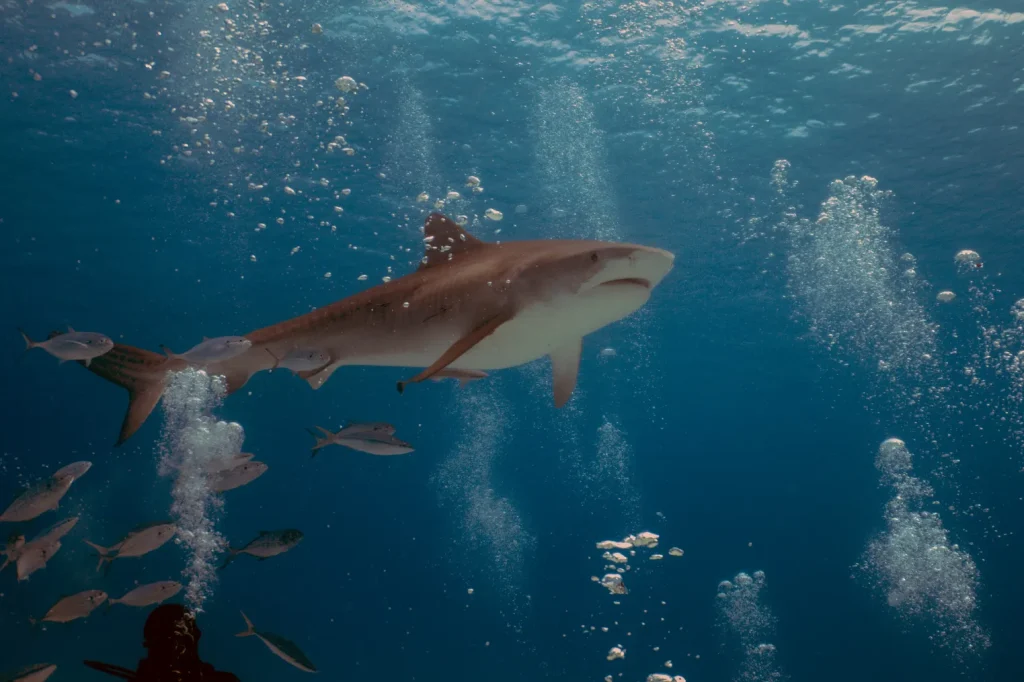
Hold neutral or slightly positive buoyancy so you can stay upright, keep a calm, vertical posture, and present a bigger profile, like standing tall in a crowded market instead of crouching in an alley.
Tuck your arms in close, keep your movements slow, and let steady breaths do the work, because bobbing up and down or flutter-kicking turns the water noisy and jumpy.
This steady, upright posture also signals non-prey body language that aligns with how sharks assess movement and intent.
When you need to change depth, do it smoothly and predictably, and give your gear a quick once-over so nothing dangles or flashes like a loose keychain asking for a closer look.
Still comparing Ocean Etiquette Around Sharks: How To Move, Float, And Stay Calm?
Ask for tour ideas, hotel suggestions, or a simple trip plan that combines both.
Trip Helper
Vertical Posture, Bigger Profile
Stand tall in the water and you’ll instantly look less like a sleek, horizontal snack and more like a calm, upright presence that’s not worth testing. Hold a vertical posture, head up and torso stacked, and let your fins hang below you, like you’re waiting at a bus stop, not sprinting for one. Before you even enter the water, confirm life jacket procedures and who on the boat is responsible for what in an emergency.
Adjust your buoyancy so you hover without bobbing, sudden rises and dips read as nervous energy and can kick up noise. Keep your arms close, or fold them across your chest, which makes your outline broader and keeps hands away from a shark’s snout, eyes, and gills. If one cruises in, face it and pivot slowly to stay square, never bolt. Stay tight with your group, silhouettes feel bigger than one.
Neutral Buoyancy, Smooth Control
Once you’ve made yourself look bigger by staying upright and facing any passerby, the next move is to make your position feel boringly steady, like you’re hovering at a museum exhibit instead of bouncing around in open water.
Dial in neutral buoyancy so you float in place, not up and down, and you won’t surprise a shark or drift into its lane. Keep your torso vertical or slightly upright, tuck your arms close, and save your fins for slow, deliberate strokes. If a sudden rush of fear hits, pause and focus on controlled breathing to stop the spiral before it turns into frantic movement. Use tiny breath trims, a sip in or an exhale, to manage tiny changes that can spark attention. Stow loose gear, clip gauges and hoses, and choose subtle colors. Practice in calm water until you can hover without grabbing coral or kicking hard.
Hands In, Gear Tidy: Reduce Shark Curiosity
Keep your hands tucked close to your chest, not stretched out like a dangling snack, so you look calm and compact if a curious shark glides in for a closer look.
Tidy up your kit by clipping down gauges, cameras, and hoses so nothing flaps, flashes, or clinks in the current, because wiggly, shiny bits can read like an invitation.
Bring a streamlined gear setup so your equipment stays snug and secure instead of dragging or bouncing as you drift.
Then steady your buoyancy and movements, slow your fin kicks and breathe smooth, since extra bubbles and sudden speed changes tend to flip a shark from passing by to checking you out.
Keep Hands Close
Often, the calmest thing you can do around sharks is make yourself look tidy and predictable, with your hands tucked close to your chest and your gear secured so nothing flaps or dangles.
When you keep hands tucked close, you cut down on quick, snack sized targets and you also steady your whole posture, like holding a book to your heart while you float. Aim for neutral buoyancy, breathe slow, and let your arms rest lightly against your torso, fingers relaxed, not splayed like a startled starfish.
If you’re joining a guided dive, choose operators who follow responsible practices like clear briefings, no-touch rules, and respectful shark interactions. If a shark noses in toward your hands, draw them even closer and widen your profile by turning your shoulders, you’ll look bigger and less interesting. Check for shiny bits before you drop in, then stay still.
Stow Dangling Accessories
Tuck everything in before you slip off the boat or step past the shore break, because dangling bits are the ocean’s version of loose threads and sharks may come over to inspect. Clip hoses and gauges flat to your torso, or tuck them into your BCD so you don’t trail tempting silhouettes.
If you’re shooting, secure dangling cameras and GoPros on short lanyards, then park them in a housing when you’re not filming. Stow your mask and snorkel too, since a flapping strap or tube can read like a twitchy snack.
Do a shine check: cover polished metal, bright buckles, and reflective tags with tape or a sleeve so flashes don’t invite a curious bite. Before the entry, stash wallets, phones, and jewelry in a dry bag or on the boat’s secure storage so you’re not distracted managing valuables in the water. A tidy kit looks calm, and it travels well.
Control Bubbles And Movement
Settle into the water like you’re easing into a quiet gallery, hands tucked close, gear lying flat, and movements kept small so you don’t become the most interesting thing in the room.
Keep your palms in and resist the urge to point or reach, because compact shapes look less like a struggling fish.
Slow your breathing, then exhale in a steady stream, you’ll control bubbles and movement, and avoid the sudden roar of froth that can pull a shark’s attention.
Hover at neutral buoyancy and trade big fin sweeps for tiny, lazy kicks, which cuts turbulence and the faint electric cues they can sense.
In a cage-free shark dive in Oahu, staying compact and calm is part of the experience because your body language is your first layer of communication in open water.
Tuck gauges, hoses, and cameras, and choose matte, muted kit over shiny bling, since flashes read like dinner bells nearby.
Stay With Your Group (and Don’t Get Separated)
While the ocean can feel wide and forgiving, sharks notice the details, and a scattered group reads like an easy puzzle.
You’ll do best when you stay with your group, close enough to tap a buddy’s fin, with only a few meters between everyone.
Hold your spot near the center, and keep steady depth, your buoyancy and kicks should prevent you from drifting above or below and becoming the lone silhouette.
Before you splash in, agree on a last-person watcher who checks behind the cluster, especially when visibility turns milky.
If you’re on Oahu, choose operators that emphasize safety briefings so everyone knows the grouping plan before entering the water.
If someone needs to surface or exit, signal early and travel together toward boat or shore.
Follow the guide’s brief, they’ll shape the pack and keep it tidy.
It’s simple, and it feels calmer.
Read Shark Body Language: Calm vs Agitated
You can tell a lot by how a shark moves, and your job is to read the mood before you settle in to watch.
If it’s gliding in steady, smooth lines with level fins and an unhurried rhythm, you’re likely seeing calm curiosity, so keep a respectful distance and enjoy the show like you’re people watching from a café table.
These curious passes often include circling behavior as the shark gathers information and gauges what you are.
But if it starts darting, circling, dropping its fins, arching its back, or bumping in toward you, treat that as a clear warning and retreat slowly, group up, stay vertical, and head for a calm exit.
Calm Shark Signals
Often, the easiest way to relax around a shark is to watch for the quiet, commuter-like rhythm of a calm one, steady tail strokes, smooth cruising speed, and pectoral fins held level like a plane on autopilot. calm sharks swim with steady,horizontal pectoral fins and smooth,even strokes rather than rapid tail beats or sudden bursts of speed. You’ll notice a level body gliding in open arcs, then a slow lateral pass that keeps a respectful gap. The eyes follow you without a hard stare, and the breathing stays even. Remember that sharks are tuned to investigate typical prey cues, and humans don’t match their usual prey profile in the water.
| Cue | Your move |
|---|---|
| Level glide | Breathe, float |
| Open arc | Hold position |
| Slow side pass | Face it |
| Parallel spacing | Enjoy, observe |
That’s your signal to stay calm and let it cruise by, with you in control.
Agitation Warning Signs
Sometimes a shark’s mood shifts in a heartbeat, and the giveaway shows up first in the fins and the tempo. If its pectoral fins stay level and steady, it’s often just sightseeing; if they angle down or droop, treat it like a yellow light and start planning space.
Next, scan the whole posture: an arched back, a tight belly, zig-zag tracks, or sudden sprint-and-brake moves mean stress, not curiosity. On an Oahu shark dive, close passes can happen, so reading these cues early helps you keep the interaction calm and controlled. Notice how it visits you, too. Slow passes and wide circles feel like a cautious flyby, but tight repeat loops, head-on lines, or a snout bump signal escalation. Add depth dips and quick tail-whips, and you’ve got a clear message. Don’t argue, back away calmly, end the dive, and exit before the scene turns serious.
Eye Contact + Spacing: How to Give Room
When a shark glides into view, treat it like a curious local checking out the neighborhood, keep steady eye contact and give it plenty of room.
Face it calmly, because sharks read head-on posture and a lack of surprise as, “not prey.” Aim for several body-lengths of space, about 2 to 3 meters for smaller species and 5-plus for big travelers like tiger sharks or great whites.
In Oahu-style group dives, use group spacing and take turns drifting into the best viewing lane so nobody crowds the shark or blocks a buddy’s camera.
If it circles or inches closer, keep your body vertical, maintain eye contact, and drift backward slowly, like you’re easing out of a narrow alley.
Don’t whip around; if you need to check a strap, use your side vision or ask a buddy to watch. In a group, stay tight so nobody looks snack-sized to a shark.
Surface Shark Etiquette for Snorkelers
Eye contact and spacing work underwater, but at the surface you’ve got a different set of manners to mind, because your splashes and silhouette read louder to a shark than your thoughts ever will. Keep your face down, mask on, and breathe slow like you’re sipping tea, it steadies your body and cuts the splashy drama. Remember that Hawaii’s shark incidents are rare and often involve tiger sharks, so calm, predictable movement is your best etiquette.
| Do | Why | How |
|---|---|---|
| Keep fins on | Quick push | Ankles together |
| Stay in a tight group | Less curiosity | Partner in sight |
| Back out calmly | Predictable | Signal, don’t spin |
If a shark cruises close, hold eye contact, use your fins and friends as a neat wall, then ease toward boat or shore without turning your back or sprinting. Talk softly through your snorkel, and keep hands out of the water.
Avoid Higher-Risk Times and Risky Locations
Although the water can look calm and welcoming, you’ll stack the odds in your favor by choosing the right hour and the right stretch of coast, because sharks hunt smarter in low light and show up where food collects. Skip dawn, dusk, and night; bull sharks and other hunters cruise harder when the sea turns gray. Favor midday in clear water, and in known shark country, go with an experienced guide. Remember that scent trails can draw animals in from farther away even when you don’t see obvious bait or blood.
- Avoid river mouths, harbors, and runoff, baitfish gather there like a dinner bell.
- Steer clear of fishing boats, lines, and cleaning spots, scraps and blood carry far.
- Check local reports, and ask reputable operators about recent sightings before you wade in.
You’ll enjoy better visibility, calmer nerves, and a trip that feels effortless.
If a Shark Acts Aggressive: De-Escalation Steps
Smart timing and a good spot do most of the work, yet every so often a shark shows up and starts acting a little too interested, pectoral fins angled down, body arched, movements quick and twitchy like a dog that’s gone from curious to keyed up.
If you spot two signs together, read that shark behavior as your cue to de-escalate. Stay calm, keep eye contact, and back away slowly toward shore, the boat, or your group, without thrashing or turning your back. Stand vertical to look bigger, raise your arms or point your fins toward it, and if you’re diving, exhale gently to make a bubble curtain. Avoid cornering the animal or blocking its path, reducing perceived threat helps prevent escalation signals from intensifying.
Group up, have the last person check behind, signal support, then exit and report the location.
Are Sharks Dangerous? Risk Facts + Why They Matter
When you step into the ocean, it helps to treat sharks the way you’d treat any big wild animal, respect the space, read the mood, and don’t assume it’s out to get you.
The numbers back that up: worldwide, fewer than eight confirmed fatalities occur most years, with about 40 to 60 non fatal incidents.
For context, the Florida Museum of Natural History’s International Shark Attack File maintains a scientifically documented database of shark attacks from the early 1500s to the present.
Most encounters feel like a quiet flyby, steady fins, smooth turns, no rush.
- Give extra caution in great white, tiger, bull, and oceanic whitetip country.
- Avoid murky water, river mouths, dawn or dusk, and fishing scraps.
- If a shark approaches, stay calm, face it, and ease toward shore or your group.
You’re far likelier to get hurt driving, so learn the patterns, look around, and travel smart most days.
Frequently Asked Questions
What Should I Do if a Shark Bumps or Nudges Me?
Maintain composure. Keep hands and fins close, don’t jerk. Hold eye contact, stay vertical, and back away toward your group/exit. If it repeats or looks threatening, end the dive calmly; later check injuries, report details.
Can I Use a Camera Flash or Bright Dive Lights Around Sharks?
Sure, blind the ocean’s apex predator, what could go wrong? You shouldn’t use camera flash; practice Flash caution. Use steady, dim dive lights angled down, avoid eyes, and follow briefings; if it agitates, cover lights slowly.
Should I Wear or Avoid Specific Colors, Patterns, or Shiny Jewelry?
Yes, make smart Color Choices: skip high-contrast stripes and neon gear, and wear muted blues/greys/olive/tan. Don’t wear shiny jewelry or reflective watches; cover them. Keep bright safety items stowed, and you’ll draw less curiosity overall underwater.
Do Shark Repellents or Magnets Actually Work for Divers and Snorkelers?
They don’t reliably work; the Effectiveness debate rages like a storm. You can try electric field devices, but results vary by species and situation, and magnets/chemicals fade fast. You’ll stay safer using behavior, not gadgets.
What First Aid Steps Follow a Shark Bite Before Professional Help Arrives?
Immediate care: you press hard on the wound to stop bleeding, pack it, and hold pressure. You rinse with seawater or bottled water, bandage it, splint the limb, treat shock, and tourniquet only if needed.
Conclusion
Out here, the sea can feel like a cathedral, and a shark can look like a headline, yet most moments are just quiet water and steady fins. You’ll float tall, breathe slow, keep hands close, and let your buddy sit in your peripheral vision like a compass. If one glides in, you back away while facing it, no splashing, no sprinting, and you exit together, calm as tourists leaving a museum with a soft grin.


