

If you’re finning along an Oʻahu reef edge and a big, brownish gray shark slides by with a tall first dorsal fin, long pointed pectorals, and a steady, unhurried cruise, you may be looking at a Galapagos shark. You’ll want to note the rounded snout and the faint ridge between the dorsal fins, then keep your movements slow, your hands close, and your buddy tight. Next comes the tricky part, telling it from the lookalikes.
Key Takeaways
- Identify Galapagos sharks by a tall, narrow sail-like first dorsal fin set behind pectoral tips, plus a visible ridge between dorsal fins.
- Expect a streamlined brownish-gray body fading to white below, a rounded snout, pointed pectorals, and no crisp black-tipped fin markings.
- Around Oʻahu, they commonly cruise reef edges, drop-offs, seamounts, and current breaks, often seen from the surface to about 25–60 m.
- Their behavior is typically calm and deliberate: slow cruising, wide circles, and repeated investigative passes near boats, cages, and familiar ledges.
- Safer, steadier encounters come from staying still and streamlined, moving slowly, keeping distance and exit routes open, and avoiding baiting or feeding.
How to ID Galapagos Sharks Off Oʻahu?
Scan the blue just beyond the reef edge and you’ll often spot a Galapagos shark by its clean, athletic shape, usually 6 to 10 feet long, with a tall, narrow first dorsal fin that rises like a sail and a long, streamlined body built for cruising.
Get closer and you’ll notice a snout, brownish gray on top fading to white below, sometimes traced by a light stripe. Check for a low midline ridge between the dorsal fins, plus pointed pectoral fins that angle like wings. If you glimpse the mouth, the upper teeth look stout and triangular with neat serrations. Around Oʻahu’s drop-offs and current lines, this Galapagos Shark stays site-attached, looping circles around boats or cages and giving divers a curious close once-over. In some of the same nearshore zones where shark-watchers note sandbar shark hotspots, conditions like reef edges and current breaks can also concentrate cruising sharks in predictable areas.
Galapagos Shark vs. Reef Lookalikes: Key Tells?
Start with the first dorsal fin and overall profile, because you can spot a Galapagos shark by that tall, narrow sail set back over the rear tips of the pectoral fins, plus a noticeable ridge running between the dorsal fins that many reef lookalikes don’t show.
In Hawaii, reef lookalikes like whitetip and blacktip reef sharks often key off distinctive fin markings, especially black-tipped fins, rather than a pronounced inter-dorsal ridge.
Next, check the color pattern and snout, you’re looking for a brownish gray back fading to white, faint fin edges rather than bold black tips, and a rounded snout on a long, streamlined body.
If you’re unsure, watch it glide past once more and line up those cues like a quick checklist, your eyes will usually catch the difference before your brain does.
Dorsal Fin And Profile
Watch the silhouette first, because a Galapagos shark wears its “tells” like clean lines against the blue.
Around Oʻahu, you’ll notice its tall, narrow first dorsal fin, set well behind the pectoral-fin rear tips, so the back looks smooth and athletic instead of humped or chunky. The first dorsal is falcate and pointed, not the broad triangle you’d expect on a sandbar, and a subtle ridge runs down the midline between dorsal fins, pointing to the second dorsal, sharpening the overall profile. If unsure, compare it with sandbar. For visitors scanning Oʻahu’s bluewater edges, sharks around Oahu can include Galapagos individuals patrolling the same drop-offs and channels.
- Look for the rear-set first dorsal fin origin.
- Check for a slimmer, longer silhouette than most reef sharks.
- Watch it cruise drop-offs, often circling with steady, deliberate strokes.
At 6 to 10 feet, it looms fast.
Color Pattern And Snout
Think of color and a nose as your quickest passport to a Galapagos shark when the water’s busy with lookalikes.
Look for Galapagos sharks that read brownish-gray on top, then fade cleanly to white underneath, often with a faint white lateral stripe and slightly darker fin edges instead of crisp black tips.
In clear Oahu light, that soft gradient can feel like sun-warmed sand.
Next, check the face: you’ll notice a long rounded snout, not the short, blunt push of a sandbar or the very blunt mug some reef species wear.
If you’re ever unsure, follow basic shark safety guidance and give it space until you’ve confirmed what you’re seeing.
If it glides past you, the pointed profile stays sleek, and you can trust your ID before it even turns.
Keep your fins still, watch for circling, and let it pass like traffic.
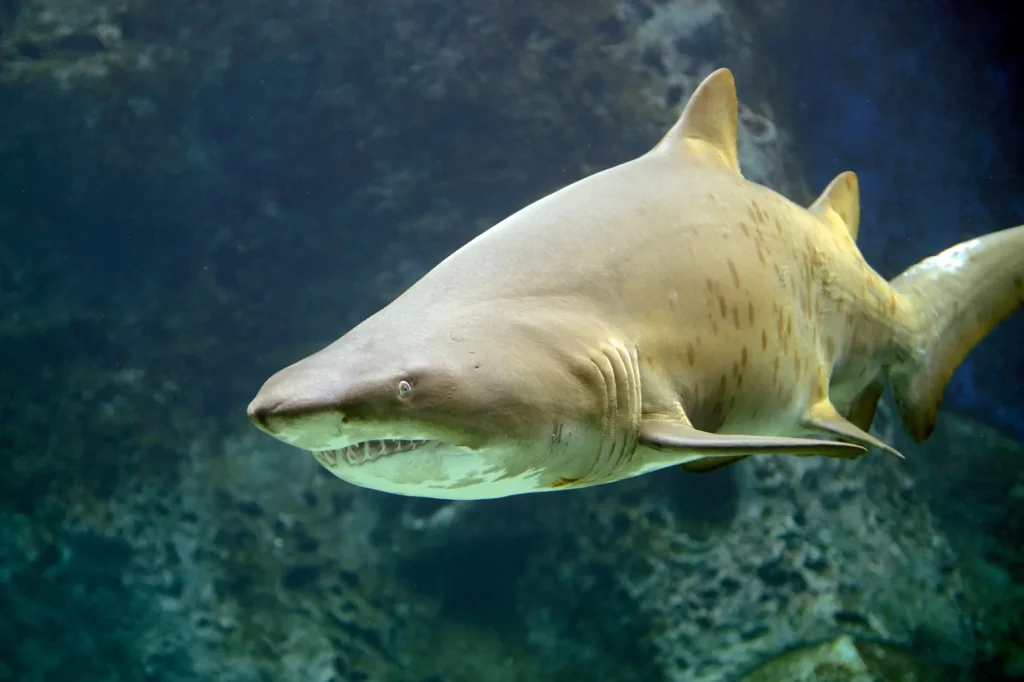
Size, Color, and Fin Shape: What to Check?
Start with size, because it’s your quickest reality check: around Oʻahu you’ll usually see a long, muscular shark in the 6 to 10 foot range, with the occasional bigger bruiser pushing closer to 12.
Next, scan the paint job in good light, you’re looking for brownish gray on top fading to white below, sometimes with a faint side stripe and slightly darker fin edges instead of one flat, uniform color.
Finally, watch the dorsal fin in profile, it’s tall and narrow and starts over or just behind the back ends of the pectoral fins, a handy field mark when the shark cruises past like it owns the lane.
In the same waters, hammerhead sharks tend to have seasonal patterns in Hawaii, so time of year can affect what you’re likely to spot.
Typical Size Ranges
Scan a passing Galapagos shark the way you’d size up a surfboard, by length, outline, and a few signature details that pop even in hazy water.
Around Oʻahu, the typical size you’ll clock is 6 to 10 ft, big enough to feel like a small canoe sliding by, yet still within the range you can judge against your dive buddy or a reef ledge.
Every so often, a true heavyweight pushes 12 ft, and you’ll notice the extra mass in the shoulders before you even think about its dorsal fin or brownish‑gray back.
On an Oʻahu shark dive, it’s normal for sharks to make close passes as they cruise by, so these quick size cues matter.
- Estimate length from nose to tail beats
- Compare body depth to nearby coral heads
- Note pectoral fins and snout shape for scale
In clear water, that length stands out fast today.
Coloration And Dorsal Fin
Lock onto the shark’s paint job and that signature first dorsal fin, because both stay readable even when the water goes milky. You’ll notice brownish-gray dorsal coloration fading to white below, sometimes with a faint pale stripe and darker fin edges. On Oʻahu, Galapagos sharks often run 6 to 10 ft, so the first dorsal fin looks noticeably tall and narrow, with a moderately curved tip. It begins roughly over the rear tips of the pectoral fins. In profile, hunt for the low midline ridge between dorsals, plus large pointed pectorals on a sleek body. Local teams often verify sightings through shark research methods like tagging and photo-ID to confirm species in Oʻahu waters.
| Check | What you see | Why it matters |
|---|---|---|
| Color | Brownish-gray top, white belly | Quick ID |
| Fins | Tall first dorsal fin, midline ridge | Separates species |
That combo rarely fools you.
Juvenile Galapagos Sharks: What Changes?
Spotting a juvenile Galapagos shark in Oʻahu waters feels like meeting the sleek, younger version of a future heavyweight, and once you know what to look for, the differences pop fast.
After birth, juvenile Galapagos sharks measure roughly 2 to 3.3 feet, and you’ll spot a slimmer body, larger eyes, and a dorsal fin that seems extra tall.
- Sharper two tone color, with faint side stripes or dark fin edges
- Quick, curious passes near your fins or the boat, often around a reef
- Small, narrow teeth that later beef up into serrated triangles
Even at this size, it can detect nearby movement through its lateral line system.
You’ll get a close look, but it won’t hold the room like an adult.
Keep your hands tucked, move smoothly, and enjoy the two tone coloring before it fades with age.
Where Galapagos Sharks Hang Out Around Oʻahu?
Head out past the calm shallows and you’ll usually find Galapagos sharks working the blue edges of Oʻahu, where reef drop-offs, seamounts, and sharp ledges meet clear water and converging currents that corral prey.
Look for them cruising the reef edges like patrol cars on a scenic loop, often circling the same dive sites with that smooth, unhurried glide. HIMB tracking suggests many are site-attached, so if a spot has produced sightings before, it’s worth planning around tides and visibility and giving it another go.
Visibility can swing widely on Oʻahu shark dives due to typical ranges and shifting conditions like swell, wind, rain runoff, plankton blooms, and current.
From the boat, scan for baitfish flickers and birds picking at the surface, then watch midwater for a dorsal fin cutting across the cobalt. Keep your movements calm, stay close to your buddy, and let curiosity do the rest.
How Deep Do Galapagos Sharks Swim Off Oʻahu?
Off Oʻahu, you can expect Galapagos sharks to range from shallow reef edges down to about 180 m, with juveniles usually keeping it much shallower, often above roughly 25 m.
Their depth shifts with age, current, and terrain, so you’ll notice them cruising reef slopes, drop-offs, and seamount edges where the bottom suddenly falls away and the water feels cooler and darker.
If you’re in a cage or on a boat, you’ll most often spot them in midwater or along the slope rather than right on the surface, so plan your scanning at about 10–100 m, keep your eyes on current lines, and don’t be surprised if they appear like a gray shape sliding in from the blue.
Many shark diving tours on Oʻahu target pelagic drop-offs where these midwater passes are most likely.
Typical Depth Range
Most of the time, you’ll see Galapagos sharks in Oʻahu waters from the surface down to about 25–60 meters (80–200 feet), especially along reef slopes and clean drop-offs where the current lines up like a buffet line.
That’s the sweet-spot depth range for divers and snorkelers, with juveniles often cruising even shallower around reef nurseries.
If you’re scanning midwater, look for:
- a dark, torpedo shape gliding just off the ledge
- slow circles above a seamount edge, like a patrol route
- a quick flash of white belly when it banks in blue water
Adults can go far deeper elsewhere, down to about 180 meters (590 feet), but around Oʻahu your best odds stay in that upper band.
If you feel your breathing spike at depth, pause and use an open water panic plan to slow your exhale and reset before continuing the dive.
Bring a lens, and keep your bubbles calm.
Factors Affecting Depth
In Oʻahu’s shark country, Galapagos sharks don’t pick a single depth and stick to it, they ride a shifting set of conditions that can put them anywhere from the surface down to about 180 meters (590 feet).
You’ll see their depth distributions tighten around reef habitats, seamounts, and drop-offs, because these structures funnel clear water and concentrate food.
When converging currents crank up, adults often work the mid-water column and slide deeper along current lines, like hikers choosing a trail.
Calmer days, warmer layers, or thin prey can pull them shallower, especially resting sharks.
Circling and repeated passes can be a form of investigative circling, helping sharks assess scent and movement as they approach.
Age matters too, juveniles usually stay in protected reef zones and rarely dip past 25 meters.
Tip: watch water clarity and current direction, they hint at where sharks will cruise.
Where Divers Encounter Them
Along Oʻahu’s steep reef edges, you’ll usually meet Galapagos sharks where the water turns cobalt and the bottom suddenly falls away, with the best diver sightings happening from about 10 to 40 meters (33 to 130 feet).
You’ll spot them cruising the reef and midwater column, especially where current sweeps baitfish over reef drop-offs or across seamounts. They don’t always hug the sand, so keep your scan wide, from your bubbles to the blue.
Timing matters too, seasonal conditions can shift visibility and currents, changing how and where these sharks show up on a given day.
Look for:
- channels that funnel flow and food
- familiar ledges where site fidelity makes repeat encounters likely
- a circling silhouette around boats or cages at 15 to 25 m
Adults can slip deeper on the slope, but daytime dives usually stay within 40 m, and that’s thrilling.
How Galapagos Sharks Behave Around Divers?
Often, your first hint that a Galapagos shark is nearby off Oʻahu is the steady, unhurried silhouette sliding in from a reef edge or current line, then turning to take a slow look at you.
These Galapagos sharks are often site-attached, so you may see the same 6 to 10 foot cruisers on repeat, especially around drop-offs and seamounts.
Underwater, they stay calm and curious, circling/inspecting you or a cage with wide turns, not quick lunges, and they’ll hold a respectful buffer even when they let you come close.
Keeping your breathing slow helps you stay calm on a first-timer shark dive in deep water.
You keep it that way by following cautious dive protocols: stay streamlined, move slowly, skip spearfishing, and obey the crew if bait or fish action starts stacking sharks in the blue for a safe dive.
Why Galapagos Sharks “Inspect” and Circle?
Out on a blue-water edge, that slow, wide circle a Galapagos shark makes around you, a cage, or the boat isn’t a movie moment, it’s an information-gathering loop. You’re watching it inspect by scent, then by electroreception, sliding closer until it can “read” tiny electrical pulses from gear and movement.
- Keep your hands in, loose and still, like you’re holding a camera, not waving a flag.
- Track the shark’s path, steady breathing helps you stay calm and predictable.
- Give it room to peel away, cornering can trigger a brief threat display.
If you’re planning a charter, confirm your meeting spot and build in extra time for the drive so you’re not rushing on the dock.
Around Oʻahu, some individuals are site-attached, so repeated charters can make visits more common.
In groups, circles also sort out who gets first access, much like a quiet queue.
In the Galapagos Islands.
What Do Galapagos Sharks Eat Near Oʻahu?
Slip into the water off Oʻahu and you’ll quickly see that Galapagos sharks don’t hunt with a single favorite snack, they cruise like practical diners, picking off reef fish such as triggerfish, snapper, and wrasse, then switching to squid, octopus, crustaceans, or even a smaller shark or ray when the chance shows up. You’ll see adults patrol drop-offs and current lines, while juveniles work shallow nurseries for small benthic fishes and invertebrates. It’s an opportunistic predatory diet, so when bait gathers or fishing activity pops, they’ll investigate and may take a hooked fish. Most meals start with reef-associated bony fishes. Compared with the Big Island, Oʻahu shark dives are often known for cage-free encounters in open water, which can shape how sharks investigate activity in the area.
| Scene | Feeling |
|---|---|
| Ledge | Tension |
| Current | Buzz |
| Nursery | Calm |
Keep your hands close, give them space, and enjoy the sleek, deliberate cruising from a distance.
How Galapagos Sharks Breed (and Litter Size)?
Meals may grab your attention first, but the real story of Galapagos sharks around Oʻahu shows up when you think about how they make the next generation, because these sharks don’t lay eggs, they give live birth. They’re viviparous, with a placenta-like link that feeds embryos for about a year after mating in January–March. While research in Hawaiʻi highlights that multiple pressures, from fishing to habitat impacts, can affect local shark populations, ongoing monitoring and protections are central to shark conservation across the islands.
- Spot the pattern: females bearing litters return to shallow nursery zones.
- Know the numbers: litters of 4-16 pups arrive at roughly 57–80 cm long.
- Read the timeline: males mature around 2.1–2.5 m, females at 2.2–2.5 m, and moms pup every 2-3 years.
When you snorkel or dive near sand flats, give small sharks space, they’re the locals’ next chapter, not a photo prop. Keep fins quiet, and avoid crowding them.
Best Time of Year to See Galapagos Sharks on Oʻahu?
Most days of the year, you’ve got a real shot at seeing Galapagos sharks off Oʻahu, but your odds jump during the calmer months when the wind lays down and reef and seamount sites hold that clear, blue “aquarium” look.
On light-wind mornings, book early departures, the water’s usually glassier and the sharks tend to cruise the drop-offs with more purpose.
Because juveniles hang shallower, you might spot smaller silhouettes over a reef ledge, while adults often show up where the bottom falls away and currents draw bait.
For North Shore trips, pay close attention to trade winds and swell direction, because even a “good” forecast can turn bumpy fast and cut visibility.
Stick to known, site-attached hotspots around oʻahu rather than random blue-water punts, and keep a flexible window, ocean conditions and prey can shift day to day.
If you can, plan two trips to hedge your bets.
How to Dive Safely and Respectfully With Them?
Often, the safest, most rewarding Galapagos shark dives off Oʻahu start with a simple mindset: you’re a calm guest in their neighborhood, not the main event.
Because these sharks are site-attached, pick known reef drop-offs and seamount edges, then settle in like you’re watching a slow parade. Keep your body vertical, kick slowly, and let curiosity come to you.
For more relaxed encounters, many divers choose a cage-free approach that prioritizes quiet positioning and minimal disturbance in the water.
- Hold a respectful distance of several meters from the shark and the reef, and never block its exit.
- Secure gauges, hoses, and cameras so nothing dangles or flashes like a snack.
- Follow the briefing, stay with your group, and don’t feed or bait; food cues can rewrite natural behavior.
If one circles, breathe steady, don’t chase, and you’ll get better looks and calmer dive.
Oʻahu Research and Conservation Protections to Know?
Because these Galapagos sharks tend to stick close to specific reefs and seamount edges around Oʻahu, you can think of them as regulars in a familiar neighborhood, which is exactly why local researchers can study them and why the state takes their protection seriously.
Their site-attached habits bring repeat sightings near drop-offs and current lines, from juvenile shallows under 25 m to adults cruising deeper slopes. Hover quietly and you’ll often see them glide past.
Hawaiʻi state law bans intentional killing or capture, so stay hands-off and flag violations to DLNR.
Reef monitoring around Oʻahu tracks their calm, curious loops, which helps scientists and supports non-lethal ecotourism. They may not star in every satellite-tag project, but they benefit whenever reef protections keep habitats intact. In nearby Marine Protected Areas, tour practices are designed to reduce impacts on reefs that support these site-attached sharks.
Frequently Asked Questions
Do Galapagos Sharks Ever Enter Harbors or Very Shallow Sandy Beaches?
Yes, but you won’t see it often: Galapagos sharks rarely enter harbors?, shallow estuaries?, tidal pools?, sandy flats?. You’re more likely to spot them near reef drop-offs, channels, or baited fishing, not open beaches today.
Are Galapagos Sharks More Active at Night Around OʻAhu?
Yes, you’ll notice the reef’s dinner lights come on after dusk around Oʻahu. You can expect more nocturnal foraging, diel movement, brief crepuscular activity, and occasional nighttime aggregation near lit or baited spots, with deliberate circling.
How Can I Report a Galapagos Shark Sighting to Local Researchers?
Report it to HIMB Shark Lab using their sighting form or email; follow sighting protocols by sharing date, GPS/landmark, size, behavior, and conditions, plus community science photo submission with media, while respecting data privacy always.
What Are Common Myths About Galapagos Sharks in HawaiʻI?
You hear Overblown danger, you hear Size exaggerations, you hear Attack frequency. You’ll also hear they’re only oceanic, always frenzied, and poorly studied. You can face Misidentified species when people confuse them with reef sharks.
Can Galapagos Sharks Hybridize With Other Carcharhinus Species Near OʻAhu?
Yes, you can’t rule it out near Oʻahu, but you’ve got no confirmed cases. You’d need hybridization genetics to test ecological overlap and mating behavior; rely on hybrid detection with DNA markers, not looks alone.
Conclusion
Spotting a Galapagos shark off Oʻahu feels like meeting the ocean’s quiet bouncer, sleek, brown-gray, and politely nosy. You’ll ID it by that tall first dorsal, long pointed pectorals, and the faint ridge between fins, then you’ll notice the slow circles at reef edges and drop-offs. Keep your hands close, move like you’re late for nothing, and give it room, your reward is a steady, goosebump-worthy glide. Aim for clear summer mornings, follow your guide.


