
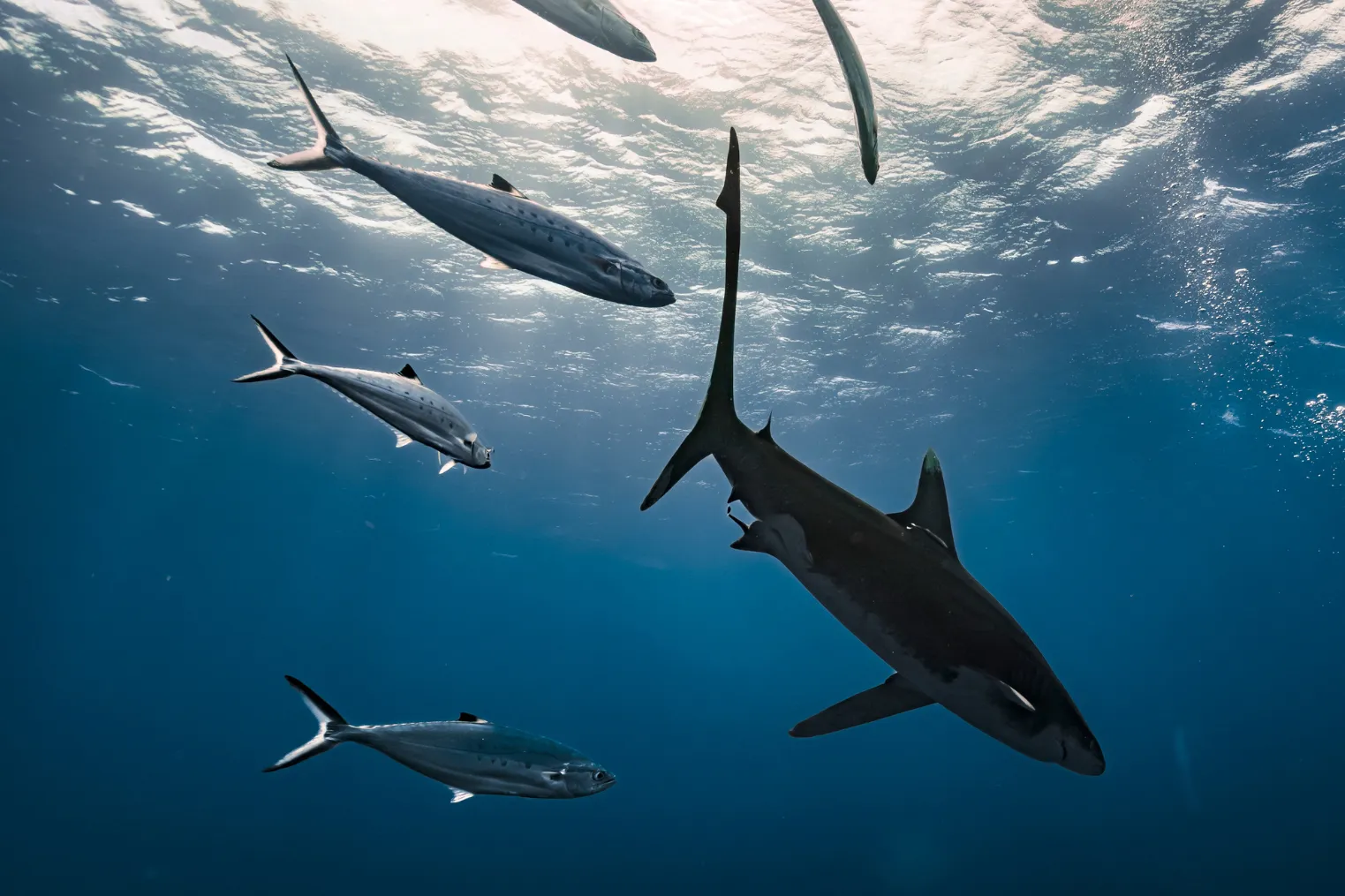
You step off a shark dive boat at 7 a.m. and a gray whale mom and calf slide past the bow like slow submarines. Salt spray stings your lips. The deck smells like neoprene and sunscreen. You hear gulls yelp over a boiling bait ball and the crew calls out, eyes on the horizon. Between drops you might catch a manta’s wingtip flash or a humpback’s clap of thunder, but the best clue is just ahead…
Key Takeaways
- Whale season typically runs March 15 to mid/late October, with the most reliable offshore sightings from June through October.
- March–May can bring nearshore gray whale cow-calf pairs and fin whales feeding on krill, especially after April coral spawn boosts plankton.
- June–October improves odds for blue whales offshore and humpbacks later in the season, with breaches, blows, and occasional lunge feeding.
- Peak days can also include dolphins in large numbers, plus turtles and mantas around reefs and plankton blooms.
- Spotting often follows birds diving, slicks, bubbles, and bait schools; crews also use hydrophones and fishfinders to locate feeding activity.

Whale Season Overview: What a Day Looks Like
If you time it right, whale season can feel like your calendar is synced to the ocean’s mood. The season runs from about March 15 to mid or late October, and your day starts with a reef snorkel to loosen up in clear, cool water. Back onboard, you sip tea while the boat transit heads for the search zone. Crew scan the glare and call in spotters, so you’re ready when shadows turn into Whale Sharks or manta rays. Along the way, you may also spot sea turtles cruising near the surface between snorkel time and the search zone. Before you jump, you get a safety briefing on distance and no touching. Then you slide in for long surface swims. You might swim with whale sharks when conditions line up. Some days stay quiet, but peak sightings can make your fins feel like rockets.
Whale Season by Month: Best Odds and Species
If you book for March through May, you can catch early-season action like northbound gray whale cow-and-calf pairs close to shore and fin whales slicing through spring swell as they feed on krill. Plan for June through October and your odds jump, with blue whales offshore in summer and humpbacks stealing the show in fall with loud breaches and lunge feeding you can hear over the wind. Keep in mind that May conditions can shift quickly on Oahu, so booking flexibility helps if winds or swell change your departure window. Keep your camera ready and your hat strapped on, because dolphins may roll in by the hundreds and sometimes the thousands.
March–May Early Encounters
As March rolls in on the Ningaloo Coast, the whale shark season clicks into gear and tours start running from March 15. You head out over Ningaloo Reef with warm air and breeze in your ears. In March–May, your odds climb fast, especially when coral spawn peaks in April and turns the water into a plankton buffet.
Early trips feel like a mixed bag in the best way. You might spot manta rays gliding like kites over the shallows, then jump in for reef snorkelling when visibility behaves. Along the beach, watch for turtle hatchlings on their tiny dash. By late May, you can even cross paths with blue whales offshore. Some days storms blur visibility, so patience helps. Book ahead for April holidays. On the water at sunrise, the early-morning experience can shape what you spot before the day winds pick up.
June–October Peak Sightings
Once June rolls around, you hit the stretch where oceans start serving the big stuff on a regular schedule. June–August puts you offshore with blue whales exhaling foghorn blasts and breaching humpbacks landing with a slap you can feel through the hull. In the Galapagos, June starts Wolf and Darwin dives, and Whale Sharks year-round suddenly look bus-sized as cold food lines meet strong currents. Before you head out, check PacIOOS Voyager to view and combine observations, forecasts, and historical ocean data for the Pacific Islands region.
| Window | Best bet |
|---|---|
| July–September | Isla Mujeres whale shark aggregations at the surface |
| June–October | Plan liveaboard trips, bring thermals, and dive smart |
You’ll scan for slicks, bubbles, and circling tuna, then drop in fast. A current can pin you to the line, so listen to your guide and stay close
Still comparing Whale Season From A Shark Dive Boat: What You Might Spot?
Ask for tour ideas, hotel suggestions, or a simple trip plan that combines both.
Trip Helper
Whale Sharks: Surface Signs and Feeding Behavior
Often, the easiest way to spot a whale shark is to watch for a slow, dark back gliding just under the surface, sprinkled with bright white spots like someone flicked paint across wet slate.
When surface feeding starts in plankton blooms or a spawning pulse at Ningaloo or Gladden, you may see a wide mouth held nearly vertical as it filters. Look for a head-up feeding posture, quick gulping, and tail beats that tap the chop. You can linger for snorkel observation, but keep about 3 m from the body and farther from tail sweeps for disturbance avoidance. Note scars and remora riders. Unique spot patterns near the dorsal fin and gills help with photo-ID if you stay calm and let it cruise past. For cleaner underwater footage, prioritize composing without chasing by holding position and letting the shark’s path fill your frame.
How Crews Find Action: Birds, Bait, and Plankton
You start by reading the birds: when terns and shearwaters pinwheel and slam the water, you’re usually looking at a tight bait ball that can pull in whale sharks and fast predators. Next you track plankton and bait by scanning for green or brown patches and those shiny, viscous slicks that look like spilled oil, then you listen and glass ahead with hydrophones and binoculars for distant blows or breaking fish. It also pays to check the boat ride conditions on the way to the shark site so you know how rough it’s getting before you commit to a run. With a lookout sweeping a wide arc from the bow and a mental note of tide and moon timing, you can guess where the buffet line will form before the first splash even gives it away.
Reading Bird Activity
On many days, the quickest clue that something big is feeding nearby comes from the sky, not the sea. You scan bird activity for tight circles, sharp dives, and that chatter over bait schools. Feeding terns sit, then drop like thrown darts. Frigatebirds glide downwind, then hook a hard turn, pointing you to an edge where Whale sharks may cruise. Shearwaters skitter and splash when baitfish panic at the surface. Sharks may also make curious passes in broad arcs that look like circling as they assess scent and movement around a bait edge.
| What you see | What it means | What you do |
|---|---|---|
| Terns diving fast | Dense patch below | Ease in and watch |
| Birds at dawn near tidal fronts | Repeatable surge | Time another pass |
Your boat crew notes flocks that hold for minutes, a hint of plankton blooms or pulses worth a detour.
Tracking Plankton And Bait
Along the tide lines and temperature breaks, crews hunt the food chain like it’s a trail of breadcrumbs on blue glass. You scan for slicks and splashes, then catch baitfish silver flashes under the sun. When seabird feeding frenzies erupt, you point the bow that way, because whales and mantas often follow the same snack bar.
Before you commit to a run, you cross-check the marine forecast for swell period shifts and wind changes that can hide slicks, scatter birds, and turn a clean temperature break into messy chop.
Below, you trust echo-sounders and the fish finder to paint thick layers. You watch the thermocline on the screen, sometimes 5 metres down, sometimes 20, and you work the edge where plankton stacks up. Tidal currents and upwellings can switch it on fast, especially near coral spawn season. Once you find a patch, you post lookouts and trade radio reports to stay in front of the moving feast.
Manta Rays in Whale Season: Reef-Edge Flybys
Often, manta rays show up at the reef edge during whale season just when the water turns busy with plankton, especially around May to June at places like Ningaloo Reef. When plankton blooms thicken, you’ll spot wings slicing the blue and then a belly flashes near drop off. These reef-edge flybys can last seconds or a few minutes, so keep your mask ready on the shark dive boat and time your snorkel and dive entry fast. For clear shots in the blue, apply underwater photography tips like stabilizing your body position and anticipating quick flybys before you hit the water.
You might get two or three passes, close enough to hear bubbles and see cephalic fins unfurl like scrolls. Follow a respectful viewing protocol. Don’t touch, don’t block their line, and keep the boat slow. With whale sharks and other megafauna around in May–June, mantas feel like the bonus.
Humpbacks in Whale Season: Breaches and Songs
Sometimes the ocean gives you a heads-up before you ever spot a humpback, and you’ll hear it first. A low, rolling whale song can drift up through the hull, and it may carry for kilometres. When you finally see humpback whales, you’ll often catch their splashy signatures: blows, fluke slaps, tail lobs, and sudden breaches that throw a 10 to 15 tonne body nearly clear of the sea. If you’re on a day trip out of Honolulu, your captain may adjust the route as part of the shark dive itinerary to give wildlife extra room while keeping the group safe.
Your crew will tweak the search pattern and brief you on boat safety. Stay seated, keep hands in, and don’t rush the rail, because close passes can mean surprise tail strikes. During migration you might meet a cow-and-calf pair near shore. Their surface behaviors look calmer, so you give them extra space and keep noise down.
Dolphins and More: Bow-Rides and Bait Balls
Whales may steal the spotlight with breaches and songs, but the boat can turn into a front-row seat for speed when dolphins show up. In summer, common dolphins can swarm in pods of 100 to 200 and bow-ride off the bow like silver commas. You’ll hear quick exhale puffs and the slap of tails as they pace you for minutes.
On Oahu shark tours, dolphin sightings often happen when pods choose to approach the boat and ride the pressure wave off the bow.
When feeding kicks off, watch for bait balls. You might spot dark fish outlines, birds raining down, and splashes as blue whales or humpback whales lunge nearby. Pacific white-sided dolphins may join in cooler months, and spinner dolphins can pop up when the water warms. The action can draw opportunistic sharks, so keep your gear stowed and follow crew calls for boat safety always.
Whale Season Etiquette: Safe, Responsible Encounters
Even if the water looks like a wide-open playground, whale season runs best when you treat every encounter like a quiet driveway with a very large neighbor backing out. On your boat ride, listen for the slap of a tail and keep your space. Stay 3 metres from a Whale shark and 4 to 6 from the tail. Approach from the side and never cut across its path.
When you swim with whale sharks or dive with whale sharks, do not touch, feed, ride, or steer them. Secure camera to your wrist and keep fins tucked. Wear reef-safe sunscreen or a rash guard. Follow your guide’s brief and time limits. Choose operators that follow responsible codes and support conservation during the best time of year. Pick operators that follow codes and support conservation during the best time of year.
Frequently Asked Questions
Do I Need a Wetsuit, and What Thickness Is Best?
You’ll need a wetsuit: pick 1–3mm in tropics, 5–7mm in seas, or 3mm plus hood. Prioritize Thermal protection, Fit comfort, Layering strategy, Material breathability, Flexibility range, Neoprene thickness, Seam construction, Zipper placement, Dry vs. wetsuit.
Are There Seasickness Tips or Medications Recommended for Choppy Crossings?
On crossings, you’ll curb motion sickness by taking Dramamine dosage 50 mg 30–60 minutes prior, using antiemetic patches, trying ginger remedies and acupressure bands, practicing slow breathing, prioritizing pre trip rest, seat selection, hydration strategies.
Can Beginners Join, or Is Advanced Diving/Snorkeling Experience Required?
Yes, beginners can join; over 90% of guests succeed on day one. You’ll get Beginner friendly briefings, guided shallow swims, equipment rentals, age restrictions, medical disclosures, buddy matching, short training drills, accessibility accommodations, emergency procedures included.
What Camera Gear and Settings Work Best for Fast Pelagic Encounters?
You’ll nail fast pelagic encounters with Fast autofocus, Continuous shooting, High shutter 1/1000–1/2000, Wide aperture f/2.8, Telephoto lenses 70–200, Image stabilization, High ISO auto, Weather sealing, and a Polarizing filter; shoot RAW, track with AF‑C.
Is Travel Insurance Needed, and Does It Cover Shark-Dive Activities?
Yes, you’ll need it: after you slip on deck, accidental coverage pays, but policy exclusions may deny dive liability without activity add ons. Check prerequisites, preexisting conditions, emergency evacuation, trip cancellation, and equipment loss before booking.
Conclusion
By the time you climb the ladder and peel off your wetsuit, the ocean’s still putting on a show. Salt dries on your lips and mask. You’ve watched lookouts scan for birds, heard the hydrophone crackle, and felt the swell lift the boat toward spouts and breaches. Maybe dolphins ride your bow. Maybe a manta glides by like a slow kite. Who wouldn’t check the horizon one more time before the ride back to port?


