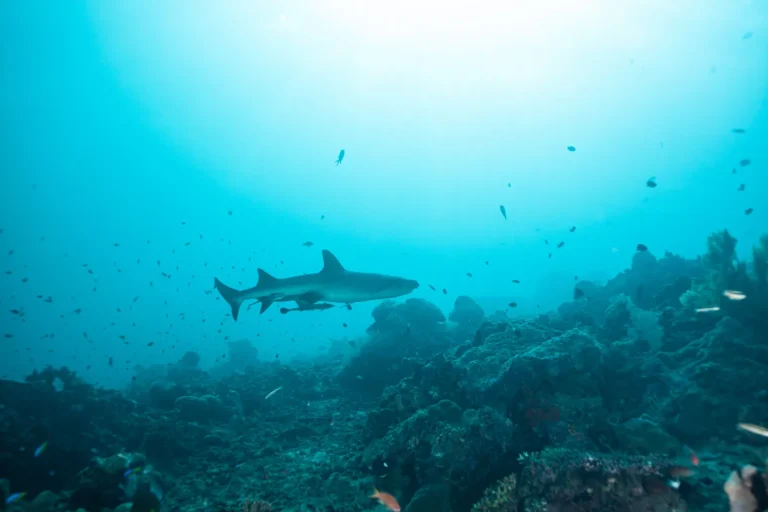
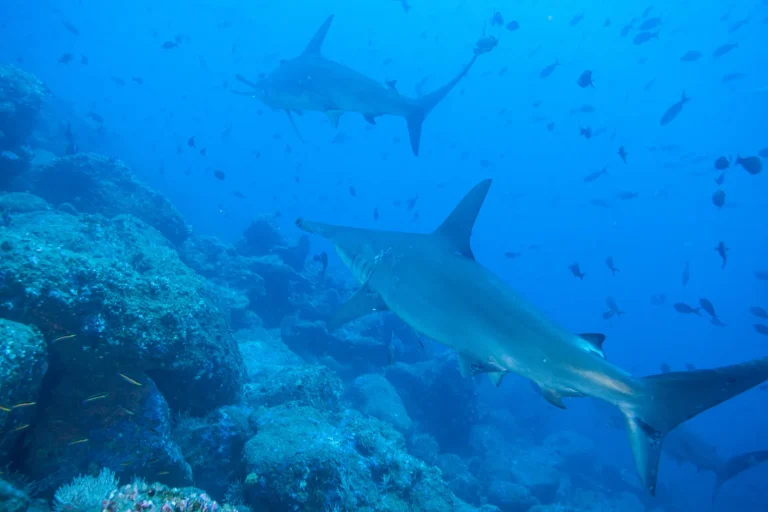
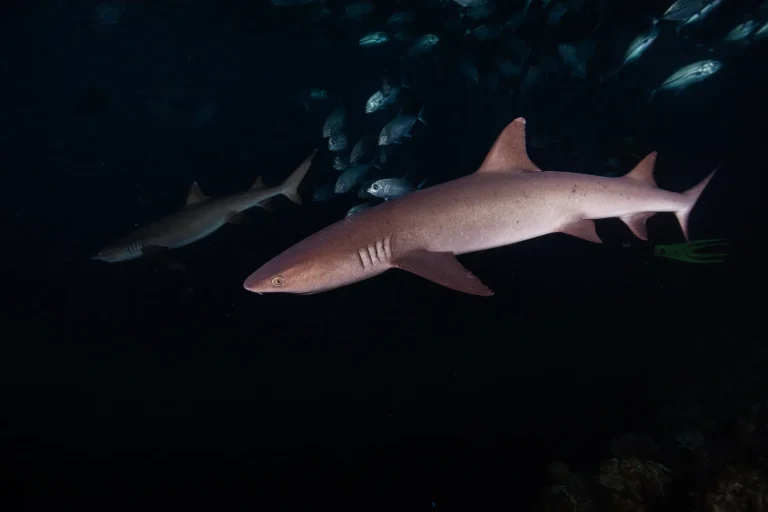
In low visibility, you don’t chase sharp shark photos, you set traps for them. Lock in RAW, AF-C with a small point on the eye, and start near 1/500s, bumping to 1/1000s when the shark pivots and the surge tugs at your fins. Keep ISO capped so the water stays smooth, stop down to f/5.6–f/8, and brace your tray like a carry on in a packed aisle, then wait for the swell’s quiet beat…
Key Takeaways
- Lock baseline settings before the dive: RAW, manual ISO (400–1600), and shutter 1/500s+, to avoid fumbling when sharks appear.
- Prioritize shutter speed over aperture in murk; raise ISO (800–3200) rather than dropping below 1/250–1/500s and risking blur.
- Use AF-C with back-button focus and a single small AF point; track the eye and release focus to prevent hunting.
- Time 5–10 frame bursts at the swell’s calm trough, starting 0.2–0.5 seconds early to catch the sharpest moment.
- Go wider and get closer (24–35mm full-frame) at f/5.6–f/8 to reduce haze, increase depth of field, and keep eyes sharp.
Baseline Settings for Sharp Shark Photos
Lock in your baseline settings before the shark even slides out of the haze, because low visibility turns every wobble of surge and every quick flick of a tail into blur.
Lock in baseline settings before the shark emerges, because low visibility turns surge and tail flicks into blur.
Start with a faster shutter speed that still fits your light, then stop down near your lens’s sweet spot, around f/5.6 to f/8, so the eye and gill line stay crisp.
Set ISO yourself, usually 400 to 1600, because auto jumps can add grain that looks like silt.
For Oahu shark dives, dial in GoPro settings ahead of time so you’re not fumbling with menus when a silhouette finally materializes.
Use single point AF with back button and AF-C, park the point on the eye or a sharp contrast edge.
If focus hunts, Switch to Manual Focus and pre set for your expected distance.
Shoot RAW, fire short bursts, and zoom to 100% between passes.
Shutter Speed for Surge and Fin Flicks
In surge, you start by locking in a shutter speed around 1/250s with a wide lens, then you step up to 1/500 to 1/1000s when you zoom in or a shark throws quick fin flicks, because the water moves you like a slow escalator.
You’ll follow the reciprocal rule as a baseline, but you’ll bump it higher when the swell or the subject gets lively, since image stabilization can calm your hands but it can’t freeze a fin snapping like a flag in gusty wind.
On Oahu shark dives, low visibility makes it even more important to prioritize that faster shutter before you start chasing ISO or aperture tweaks.
To nail the sharp moment, you’ll pair that fast shutter with burst shooting, rattling off frames as the shark glides past so one lands crisp when the timing and the surge finally line up.
Minimum Speed For Surge
When the water starts shoving you around like a slow, clumsy dance partner, shutter speed becomes your best defense against soft shark edges and smeared fin flicks.
In surge conditions, set your baseline at 1/250s for a gentle push, then jump to 1/500s or even 1/1000s when the swell snaps you sideways.
Use the reciprocal rule as a reality check, if your rig feels like 200mm, 1/200s is the floor, but surge demands faster.
Stabilization helps, yet don’t dip below 1/125s to 1/250s with wide angle.
If light’s thin, raise ISO to 800 to 3200 so you keep a shutter speed to freeze the wobble, and fire short bursts through calmer beats.
If your breathing spikes and you feel panic rising, use slow breathing to steady your buoyancy and timing before you recommit to the shot.
Pre-focus a passing lane, hold steady, and let the surge choose moments.
Freeze Fin-Flick Motion
Crank your shutter speed up and you’ll catch that quick fin-flick like a crisp hand gesture instead of a smeared blur drifting through green water.
Start at 1/500s in shallow, surge-prone spots where tails twitch fast, then push to 1/1000 to 1/2000s when the shark charges, turns, or the water shoves you around.
Use the reciprocal rule as a baseline, take your effective focal length and match or beat it, but still lean faster because fins don’t hold still for anyone.
If visibility’s dim, resist the slower shutter temptation, raise ISO to your camera’s comfort zone, and let sharpness win.
Add high-speed drive and, with strobes, a short flash duration to pin motion and tame backscatter.
Keep your elbows tucked, and breathe out slowly.
Before you even roll in, secure your rig with a camera lanyard on the shark dive boat so a surge or bump doesn’t send it overboard.
Burst Timing With Swell
Sharp shutter speeds stop fin blur, but swell adds a second kind of motion, the slow shove that makes your whole rig drift like you’re filming from a shopping cart. Unlike short-period wind chop, long-period ocean swell can keep sliding your framing even when the surface looks briefly calmer.
In steady surge, don’t bargain below 1/250s for quick fin flicks, and jump to 1/500 to 1/1000s when a medium fast shark snaps a turn or cracks a tail slap.
Time bursts to the trough, watch kelp tips and sand ripples, then fire 5 to 10 frames when everything briefly settles.
Run high speed continuous, 10 to 20 fps, with AF C and back-button focus, so tracking stays locked while you time the calm.
Pre focus on the pass distance, and if the water’s dark, raise ISO 800 to 3200, noise beats blur anytime.
Aperture for Murky Water (Keep Eyes Sharp)
Dial in a moderately narrow aperture, around f/5.6 to f/8, and you’ll give yourself the breathing room you need in murky water, where the shark can drift a foot closer or farther between one fin beat and the next. This aperture range widens depth of field so the eyes stay sharp, yet it’s not so tight that diffraction turns details to mush. While fine-tuning exposure, remember the No Touch, No Chase rule so you don’t pressure sharks into sudden distance changes that wreck focus.
Skip f/1.4 to f/2.8, in green soup that thin focus plane will trick you in shark encounters. With telephoto or a cropped frame, stop down one stop, f/8 to f/11, to hide magnified focus slips. Up close in shallow haze, open to f/4 to f/5.6 only if autofocus nails the eye; otherwise stay at f/5.6 to f/8 and let the background melt.
ISO Limits: Keep Detail, Control Noise
Once you’ve picked an aperture that gives you a bit of depth of field insurance in murky water, ISO becomes your quiet bouncer at the door, it decides how much fine shark-skin texture gets to stay and how much gets replaced by gritty noise.
With depth of field locked in for murky water, ISO plays bouncer, preserving shark-skin detail or swapping it for noise.
Test your camera in similar water and set an ISO ceiling, often 800 to 1600, with 3200 only when you must. Push shutter speed first, start at 1/500s, then raise ISO just enough. If you’re deciding between a GoPro and a phone in a case, remember that GoPro vs Phone Case low-light performance can change how soon you hit your ISO ceiling and how much detail survives.
- Use Auto-ISO, cap it, and set a minimum shutter of 1/500s.
- Use a Faster shutter when the shark surges, accept a little grain.
- Shoot RAW, underexpose slightly, and recover shadows later.
- Zoom to 100% and confirm the eye and skin look crisp.
AF-C Setup for Moving Sharks
Lock into AF-C and treat it like holding a steady line in choppy water, you want the camera clinging to the shark’s eye, not bouncing to the glitter of sand or a stray bubble in the green haze.
Stay in AF-C (continuous AF). Set a single point or spot AF, skip wide zones, and you’ll track one target instead of whatever contrast pops up. Put focus on a back-button so you can keep tracking while you reframe as the shark tilts past your port. Crank tracking sensitivity, and switch on subject or eye detection if your body offers it, mirrorless bodies often nail it even in murk. Keep steady spacing and follow hand signals so you’re not drifting into another diver’s frame or spooking the shark with sudden moves.
Then shoot bursts at 6 to 20 fps, hold 1/500s minimum, and push 1/1000s for fast drive-bys.
Back-Button Focus to Prevent Hunting
AF-C tracking gets you in the game, but in low visibility the real win is stopping your camera from refocusing every time your finger twitches on the shutter. Assign AF to the back button so the shutter only fires, and the camera stops hunting in milky water between burst frames. When you compose your shot, commit to a clean lane and avoid pushing in, filming without chasing keeps sharks calmer and your framing steadier.
- Set AF-ON as your back button, disable shutter AF in menus.
- Choose a single small point, press and hold to grab focus, then let go once the camera has focus.
- If it won’t lock, aim at a nearby stand-in, then keep that distance and shoot as the shark slides through.
- Pair it with high-speed drive and a pre-picked lane in the surge, so one frame lands crisp for your keeper.
Focus on Eyes or Contrast Edges
Start by locking your single-point AF on the shark’s closest eye, because even in green, grainy water that tiny dark bead is what makes the whole photo feel alive.
When the eye looks smooth or lost in haze, shift that point to a nearby high-contrast edge like gill slits or a bold pigment patch, your camera will grab those crisp lines faster than a featureless glare.
In tight, murky encounters, a wide-angle lens can help you stay close enough that the eye and contrast edges fill the frame and give your autofocus more detail to bite onto.
If focus still hesitates, keep your aim on the eye-plane and use a tight zone to track, sometimes a quick touch of light on the face is like giving your AF a street sign to follow.
Lock Onto The Eyes
Dial in your focus like you’re threading a needle in green, hazy water, because a sharp eye is what makes a shark portrait feel alive even when the scene looks like soup. Start with single-point or spot AF and plant the box on the near eye; if it’s hard to see, nudge it to a gill slit or snout edge where contrast pops. Run continuous AF, add back-button focus, and let the camera stay glued while you recompose as bubbles and sand drift past. Strong, stable kicks from powerful fins can also help you hold position so your AF point stays pinned on the eye instead of wobbling off target.
- Track the eye, not the body.
- If AF hunts, switch to manual, magnify, and pre-focus where it’ll cruise.
- For fly-bys, pre-focus on a rock and burst as the eye crosses.
- Start 1/500s to freeze the twitch.
Use Single-Point Autofocus
Once you’ve trained yourself to hunt for the eye in that green, hazy water, give your camera the same clear job by switching to single-point autofocus, ideally the smallest focus box it offers. You’ll stop the lens from drifting through milky water and tell it, plainly, “focus here,” right on the shark’s eye, or on a crisp line like the gill slit when the eye won’t cooperate.
Pair single-point AF with AF-C and back-button focus so you track with your thumb and recompose without the shutter shifting focus. A snug, low-bulk setup from your Oahu shark diving packing list also makes it easier to hold steady and keep that tiny AF point pinned where you want it. If it hesitates, pre-focus on a rock at the same distance, hold it, and wait for the shark to enter your plane.
In the murkiest soup, go manual with peaking or magnified view for extra certainty.
Target High-Contrast Edges
Hunt for contrast like you’re reading a road map in fog, then park your single, small focus point on the shark’s eye or the sharpest light to dark edge you can see, because autofocus locks fastest when it finds a clean border to grab. In murk, set spot or single-point AF, and if the eye vanishes, aim at a fin margin, gill slit, or the dark fin against pale sand at the same distance. To keep that edge crisp, use mask defogging fixes so haze on your lens doesn’t mimic low visibility and steal contrast right when AF needs it most.
- Hold back-button focus in AF-C, recompose as surge nudges you.
- Track the best high-contrast edge, not the whole body.
- When AF hunts, jump to Live View magnification or manual focus with peaking.
- Pre-focus where it’ll cruise, shoot 1/500s or faster, and burst for a crisp eye.
When AF Fails: Pre-Focus and Shoot the Lane
Pick your spot, set your focus, and let the shark do the traveling, because in milky, low-contrast water your camera’s autofocus can waste the best moment by searching for something to grab. Pre-focus on a fixed spot like a pale sand patch, a rock edge, or a moored float at the distance you expect, then switch to manual focus or lock focus with back-button AF so it won’t hunt. Make sure you can see clearly by practicing mask clearing before the action starts, so a small leak doesn’t blur the moment you’ve staged.
Aim a small single-point AF box down that lane, and use AF-C if it helps you keep composition. Start at 1/500s, jump to 1/1000s for sudden bursts, and set ISO manually so exposure doesn’t drift while you wait. Shoot a tight burst as it crosses the plane; if AF sulks, flash a light for contrast.
Stabilize Underwater: Tray, Buoyancy, Two-Hand Grip
A solid tray with two handles turns your camera into something you can steer, not just hang onto, which matters when low visibility and a bit of surge make every frame feel like you’re shooting through skim milk. Treat it like a handlebar, not a dangling purse. Before you drop in, confirm life jackets are stowed and the crew’s roles and procedures are clear so your entry and exit stay controlled in low visibility.
A two-handle tray lets you steer your camera in murk and surge, like handlebars, not a dangling purse.
- Take a two-hand grip on the tray, elbows tucked, wrists still.
- Trim buoyancy to neutral, then make small, slow breaths to hover.
- Add floatation to the tray for long lenses so it’s neutral or slightly positive, easing fatigue.
- In murk, lightly brace the tray on sand, rock, or your thigh, and keep distance from sharks.
You’ll see focus snap in when surge nudges you. Set 1/500s or faster to freeze your own shake.
Burst Technique: Timing the “Still” Moment
Lean into burst mode and let the camera do the patient work for you, because in low visibility the water moves like a slow, restless elevator and the shark never quite holds still.
Use high-speed continuous drive, track the shark, and hold the shutter to catch the brief frames when surge and body motion cancel into a near still pose.
Anticipate the pause between surge cycles and start your burst 0.2 to 0.5 seconds early, so your buffer holds the peak steady moment.
Keep shutter speed snappy, 1/500s for cruising, 1/1000s for quick turns, and shoot RAW.
Run AF-C with a single small point or eye tracking so focus sticks.
After the dive, follow a streamlined workflow to quickly flag the sharpest burst frames for Reels or YouTube.
Review at 100%, note the sharp frame number, then retime your next burst accordingly.
Best Focal Lengths and Lenses for Low Visibility
In low-visibility water, you’ll get your best shark shots by going wider, think 16–50mm full-frame equivalent, because every extra meter of green haze between you and the subject adds scatter and softens detail.
On Oahu shark dives, plan your lens choices around typical visibility ranges that can shift with conditions like swell, wind, and recent rain.
Pack a fast wide zoom or a sharp prime in the 35–50mm range, then move in close, let the shark fill the frame, and use that brighter glass to keep your shutter quick when the light looks like late afternoon underwater.
When you pick lenses that focus close and stay crisp across the frame, you’ll spend less time fighting murk and more time catching clean eyes and confident silhouettes.
Choose Wider Focal Lengths
When the water turns milky and the sharks fade into a gray-green backdrop, your best move is to go wide and move closer, so you’re shooting through less “soup” and keeping contrast and fine detail intact. In low viz, aim for 24–35mm full-frame (16–24mm APS-C) and treat it like snorkeling in fog, you want your subject near enough to touch. Wearing a thin rash guard layer under your wetsuit can also help keep you comfortable enough to stay closer and steadier for sharper wide shots.
- Pick a wide-angle prime at 24 or 35mm for crisp edges and better contrast.
- Use a 16–35, 14–24, or 24–70 at the short end to fill the frame fast.
- Keep 1/250–1/500s to freeze surge, and stop down to f/4–f/5.6 for enough light plus depth.
- Skip long telephotos in soup, they stretch distance and magnify focus slips, every shot looks cleaner.
Favor Fast Wide Zooms
Wide is your starting point in low viz, but a fast wide zoom turns that idea into a flexible plan you can actually use while the shark drifts in and out of the haze.
Aim for 16–35mm on full frame, or 10–22mm on APS-C, so you can stay close, keep more reef in the frame, and cut down the cloudy water between you and teeth.
Pick fast wide zooms that hold f/2.8 across the range, like a 16–35mm f/2.8 or 14–24mm f/2.8, then ride 1/250 to 1/1000s with a calmer ISO.
Stop down to f/4–f/8 for crisp corners, and choose pro-grade wide zooms or sharp primes, since contrast is precious in murk.
If you’re booking a shark charter, confirm they offer an inclusive range of wetsuit sizes so you can stay warm and stable enough to hold your framing in choppy, low-visibility water.
In surge, weather sealing and steady AF let you shoot bursts cleanly.
Prioritize Close-Focus Lenses
Often the best way to beat low visibility is to let your lens focus closer than your nerves want to, so you can move in within a few feet and keep that shark big in the frame while the green haze stays behind you.
To keep your images feeling candid, use natural-looking poses by relaxing your hands and angling your body slightly rather than stiffly squaring up to the shark.
- Pick a wide-angle close-focus zoom: 10–24mm on APS-C or 16–35mm full-frame, and learn its minimum focus like a travel phrasebook.
- Aim for 0.5–1.0 m focusing, which trims backscatter and snaps up contrast.
- Trust fast autofocus, then stop down 1–2 stops, around f/4–f/8, for cleaner corners.
- If the water’s soup, pack a short telephoto macro, 70–105mm, so you can hang back yet still fill the frame.
Test sharpness at minimum focus before you splash in, and check it on the boat.
RAW Sharpening for Underwater Photos (No Halos)
Dial in your RAW sharpening like you’re clearing a fogged dive mask, little by little until the shark’s edges snap into focus without turning the murky water into a crunchy halo factory. In underwater photography, start with denoising first, then add moderate global sharpening, Amount 40–60, Radius 0.8–1.2, Detail 25–40, so you lift real detail, not backscatter sparkle.
Next, try a low-radius, high-detail pass, Radius 0.6–1.0 and Detail 40–60, then mask sharpening to the shark with a Subject or Luminance mask, protecting flat water by holding Alt on the Masking slider. If halos creep in, paint an inverted edge mask and add a tiny 0.5–1 px blur, or use Remove Halo. Export gently, Screen 30–50, preview at 100%. Check fins and gills for grit.
Frequently Asked Questions
Do I Need Strobes or Video Lights for Sharp Shark Photos in Murky Water?
Yes, you’ll usually need strobes or strong continuous lights for sharp shark photos in murky water. Strobes’ short bursts freeze motion; use strobe diffusion and off-axis placement to cut backscatter and help autofocus lock.
How Close Should I Get to Sharks to Improve Sharpness Without Unsafe Behavior?
On a leopard-shark dive, you’ll shoot sharpest around 0.5–1.5 m, but you Maintain distance, 1–2 m buffer (3–5 m for sharks). Use a Controlled approach: move slowly, stop, then let it close in for crisp frames.
Which Underwater Housing Ports (Dome Vs Flat) Work Best in Low Visibility?
You’ll usually get better results with a flat port in low visibility at close range, despite flat limitations in wide-angle coverage. Choose domes for distant shots and dome advantages, but add hoods/smaller ports to cut backscatter.
How Do I Reduce Backscatter While Keeping Shutter Speed High?
Pull your strobes off-axis so the water’s snow stays dark; crank power for a short flash and shoot 1/250–1/500s with sync testing. Get within 1–2m, stop to f/5.6–f/8, add a grid, aim slightly forward, too.
What Dive Positioning Helps Avoid Silt Clouds and Preserve Clarity Around Sharks?
Use an angled approach and hold position above, up-current of the shark. Keep neutral buoyancy, stay an arm’s length off the bottom, fin, drift with surge, and you’ll coordinate buddy moves to prevent silt clouds.
Conclusion
In low vis, you don’t win by praying to the autofocus gods, you win by being boring on purpose. Lock RAW, ride AF-C on the eye, and keep shutter speed brisk so surge and tail flicks don’t smear like cheap sunscreen. Stop down to f/5.6–f/8, cap ISO before it turns to sandpaper, and brace your tray with calm buoyancy. Fire short bursts at the swell’s pause, then sharpen gently, no halos, and let water behave.